My heart still pounds thinking about that night, even months later.
I thought I was just a caregiver, someone who brought comfort and a kind word.
I never imagined I'd be fighting for someone's life against the very people sworn to protect it.
Mrs. Henderson was a gem at Elmwood Care, always had a twinkle in her eye, despite her memory fading.
She reminded me so much of my own grandma, and I felt a fierce protectiveness over her.
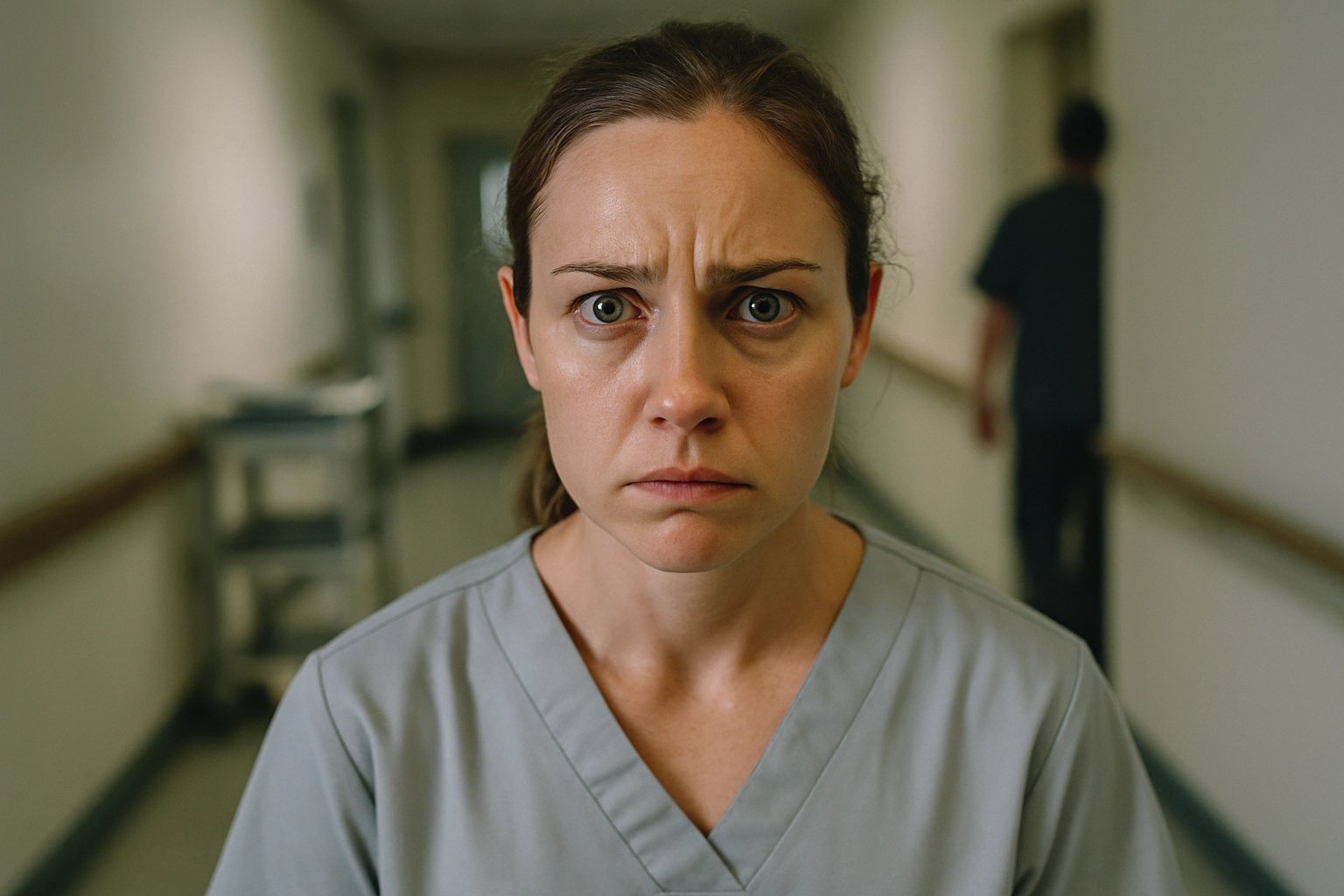
One Tuesday morning, something felt off.
She was unusually quiet, her skin clammy to the touch.
It wasn't just "an off day"; it was a deep, unsettling stillness.
Her breathing seemed shallow, her eyes cloudy, not just tired.
I called the charge nurse, Brenda, immediately.
"Mrs. Henderson isn't right," I insisted, my voice tight with worry.
Brenda gave her a cursory look, checked her vitals, and just shrugged.
"Looks like a touch of the flu, Sarah, it's going around," she said, dismissively waving her hand.
But I knew Mrs. Henderson.
This wasn't the flu.
The next day, she was worse, barely responsive.
I tried again, cornering Dr. Evans during his rounds.
"Doctor, please, look at Mrs. Henderson again," I pleaded, blocking his path.
"Her pulse is thready, her color is terrible, and she's barely eaten in two days."
He sighed, a long, weary sigh that made me feel like an irritating child.
He glanced at her chart, then at her sleeping form.
"Sarah, her blood work came back clear for infection yesterday," he stated, his voice flat.
"She's old, these things happen; sometimes they just decline."
My stomach clenched with a cold dread; decline wasn’t the right word for this.
I felt a surge of indignation, a heat rising in my chest.
He didn't even touch her.
He just looked at the numbers, not the person.
Later that afternoon, I found her struggling to breathe.
A faint blue tint was starting to appear around her lips.
This was not "decline."
This was an emergency.
Panic started to set in, a cold, sharp blade twisting in my gut.
I called Brenda again, practically shouting.
"She's barely breathing, Brenda! She needs oxygen, she needs a doctor now!"
Brenda arrived, still looking annoyed, but when she saw Mrs. Henderson, her face finally registered a flicker of concern.
"Okay, okay, get the oxygen," she mumbled, fumbling with the mask.
But her eyes were still glazed with uncertainty, not the clear, decisive look of a seasoned nurse.
I watched her, a horrifying thought crystallizing in my mind.
They had missed something fundamental.
They were still missing it.
I knelt beside Mrs. Henderson, tears stinging my eyes, feeling utterly helpless.
I remembered a small, unusual symptom I'd noticed days ago, a subtle swelling in her ankles, which I’d mentioned and was dismissed as "just old age."
Now, combined with the shallow breathing and clammy skin, a terrifying possibility clicked into place.
Congestive heart failure.
Not the flu.
Not "decline."
This required immediate, aggressive intervention, not just oxygen and a shrug.
But who would listen to me?
I was just a caregiver, not a doctor, not even a registered nurse.
My professional opinion, my years of direct patient interaction, counted for nothing here.
Desperate, I remembered my cousin, an ER nurse at a different hospital across town.
I fumbled for my phone, my hands shaking so hard I almost dropped it.
"Kelly, it's Sarah," I whispered, trying to keep my voice steady.
"I need your help, fast. It's about a patient here, Mrs. Henderson."
I quickly described everything, the symptoms, the dismissals, the blue lips.
Kelly's voice, usually calm, became sharp with urgency.
"Sarah, that sounds like acute heart failure," she said, a chill running down my spine.
"She needs to be at a hospital, with a cardiologist, now."
"They won't listen to me, Kelly," I choked out, a sob rising in my throat.
"They've already dismissed me twice."
"You have to force their hand," Kelly instructed, her voice firm.
"Tell them you're calling 911 yourself if they don't transfer her immediately."
"It's against protocol, Sarah, but her life is on the line."
I hung up, my heart a frantic drum against my ribs.
Brenda was still futzing with the oxygen tank, looking overwhelmed.
"Brenda," I said, my voice surprisingly steady, "This is not the flu. This is heart failure. She needs to go to the emergency room, now."
Brenda scoffed, "Sarah, you're not a doctor."
"No, but I know what I'm seeing," I retorted, stepping between her and Mrs. Henderson.
"If she's not transported to the ER within the next ten minutes, I'm calling 911 myself."
Brenda's eyes widened, a flicker of fear mixed with anger crossing her face.
"You can't do that!" she hissed.
"It's against facility policy! You'll lose your job!"
"Then help me save this woman's life," I pleaded, my voice cracking, "before it's too late."
The next few minutes were a blur of frantic phone calls and hushed arguments.
Finally, Dr. Evans was reached on his cell phone.
He sounded irritated, but Brenda must have conveyed my threat with enough panic.
An ambulance was called.
The paramedics arrived, their faces grim as they quickly assessed Mrs. Henderson.
They barely exchanged a glance with Brenda or me before rushing her onto the stretcher.
"Acute heart failure," one of them confirmed, nodding grimly at her swollen ankles.
"She's lucky to be alive."
Those words hit me like a physical blow.
Lucky.
Lucky because I wouldn't shut up.
Lucky because I defied direct orders and risked my job.
Hours later, the hospital confirmed it.
Mrs. Henderson had been in the throes of severe congestive heart failure.
The "flu" diagnosis had been a catastrophic error.
She needed emergency medication, specialized care, and was immediately admitted to the ICU.
I sat in the waiting room, shaking, the adrenaline finally draining from my body.
I had done it.
I had saved her.
But the anger, the profound sense of betrayal, was searing.
How many times does this happen?
How many people are dismissed, their lives hanging by a thread, because someone in authority won't listen?
The facility launched an "internal review."
I was praised by Mrs. Henderson's family, who were furious at Elmwood Care, but I also received a stern warning about "protocol adherence."
My job was safe, for now.
But I'm not the same caregiver anymore.
Every cough, every pale face, every dismissive glance from a doctor sends a jolt of fear through me.
I now see the cracks in the system, the profound arrogance, and the heartbreaking vulnerability of the people we are supposed to protect.
Mrs. Henderson is recovering, slowly, but she’s now in a different facility.
I visit her sometimes.
She doesn't always remember my name, but she always smiles.
And sometimes, when I hold her frail hand, I remember that terrifying night.
I remember staring down authority, standing up for what was right.
And I know, without a shadow of a doubt, that I would do it all again.