Grief has a strange way of opening doors you never knew existed.
My Uncle Arthur’s passing was sudden, a heart attack, silent and swift.
He was the last of his generation, a recluse, but always kind to me, his favorite niece.
I never imagined his will would leave me Hawthorne Manor, the sprawling, gothic mansion that had been in our family for generations.
The house always felt like a character itself, full of creaking floors and whispered memories.
It was majestic, a little intimidating, but held a nostalgic charm I cherished.
I moved in a month later, still navigating the heavy silence of the rooms and the echoes of a life I barely knew.
My aunt Mildred had warned me about Arthur’s study, a room she’d always considered sacred, a place of intense privacy he rarely let anyone enter.
“Arthur’s sanctuary,” she’d called it with a shudder, “a labyrinth of old books and peculiar treasures.”
The will stipulated that the study was to remain locked until my arrival, then I was to open it alone.
It felt like a final, cryptic instruction from a man who loved puzzles.
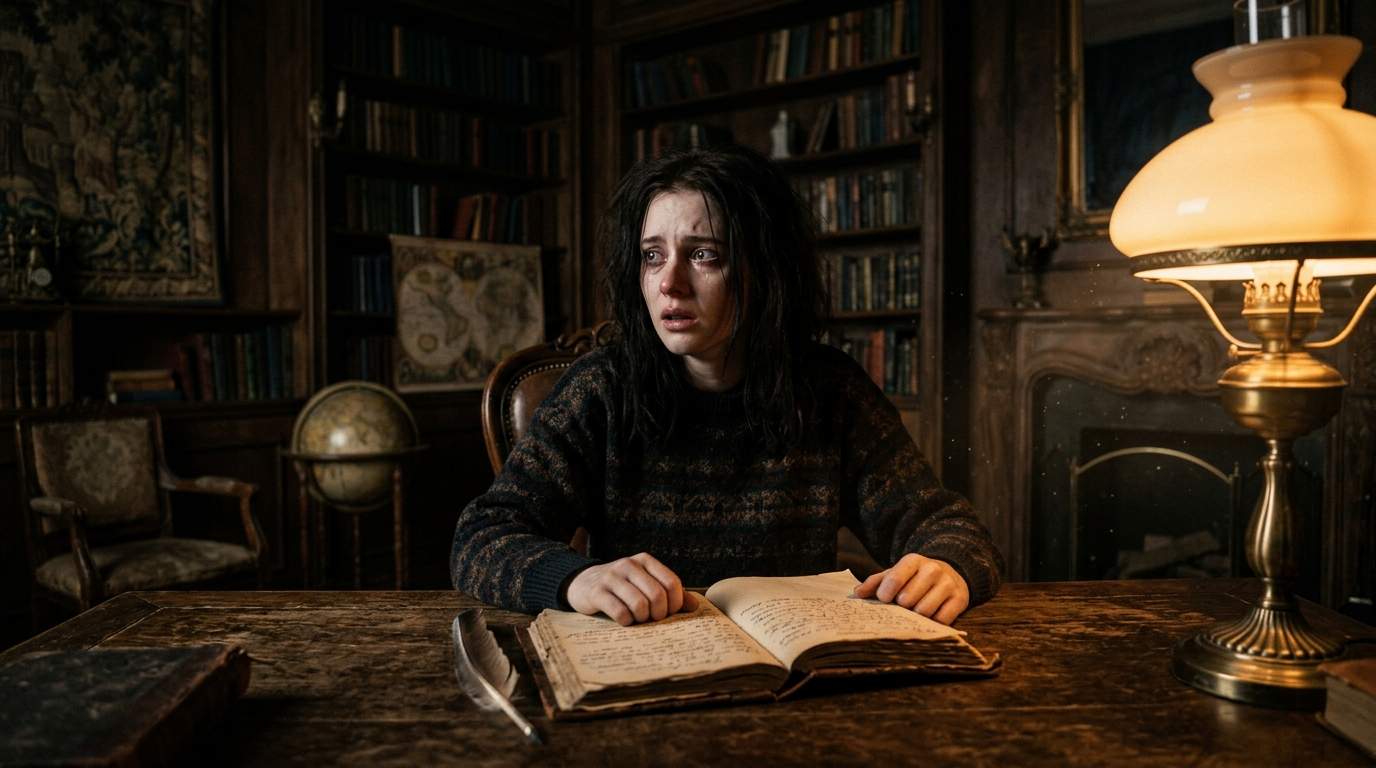
The day I finally pushed open the heavy oak door, dust motes danced in the shafts of sunlight slicing through the tall windows.
The air was thick with the scent of aged paper, leather, and something else – a faint, metallic tang I couldn't place.
Bookshelves soared to the ceiling, crammed with forgotten tomes and odd artifacts.
A massive mahogany desk dominated the center of the room, its surface covered in antique inkwells, scattered notes, and a half-finished crossword puzzle.
I ran my hand over the smooth, cold wood of the desk, feeling a strange mix of reverence and trepidation.
It was here, in this room, that Arthur had spent his final, solitary years.
I started to tidy, trying to connect with him through his possessions, a bittersweet ritual of remembrance.
My fingers brushed against an ornate carving near the desk’s base, not part of the decorative pattern, but a subtle indentation.
Curiosity piqued, I pressed it lightly, and with a soft click, a small, cleverly disguised drawer sprang open from the side panel.
My heart gave a little jolt; this was something beyond just Arthur’s personal space.
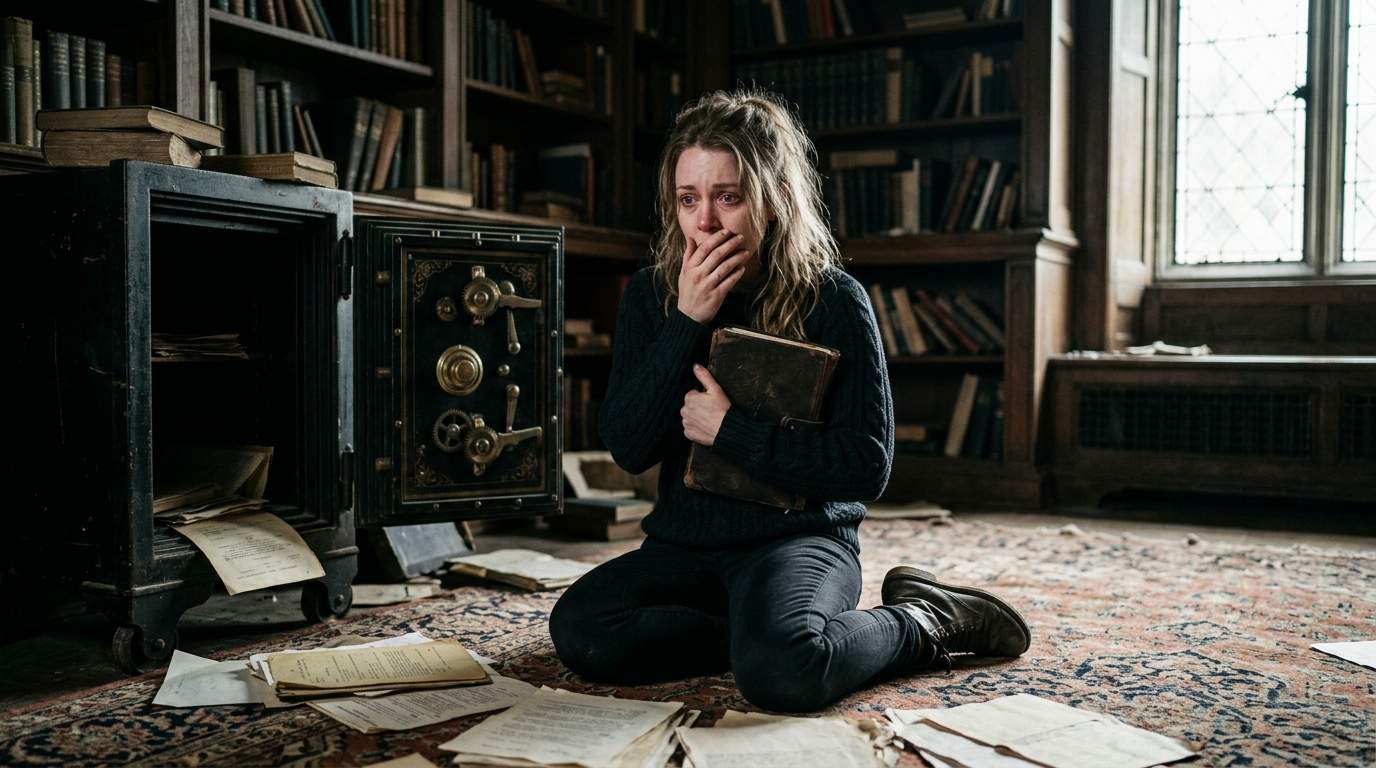
Inside, nestled on a bed of faded velvet, was a single, leather-bound journal, its cover worn smooth by countless touches.
No lock, no key, just an unassuming book waiting to be found.
I pulled it out, my fingers trembling slightly, a strange premonition creeping over me.
It wasn't a diary of daily events; it was a meticulous record, dated years ago, written in Arthur’s elegant, precise hand.
The entries began innocently enough, notes on local history, observations about the changing seasons.
Then, the tone shifted.
The pages started detailing a property dispute with a neighboring family, a fierce, bitter feud over a small parcel of land bordering Hawthorne Manor.
Arthur had always been passionate about his ancestral grounds, but this was different.
His words became colder, darker, filled with a simmering resentment.
He spoke of "eliminating obstacles" and "ensuring the family's legacy."
I flipped a few pages, my eyes scanning keywords, my breath catching in my throat.
Then I saw it.
A chilling entry, stark and undeniable, detailing a night years ago.
It described a planned "accident," a late-night stroll near the cliffs by the disputed land.
The name of the neighbor, a man who had vanished without a trace almost thirty years ago, was written plainly.
Arthur recounted the event with clinical detachment, almost like a scientific experiment, detailing how he’d ensured no witnesses, no evidence, how he’d made it look like a tragic fall.
My uncle, the kind, eccentric man who taught me chess and told me stories, was a calculated killer.
The blood drained from my face, leaving me lightheaded, nauseous.
This wasn't just a secret; it was a horrifying, monstrous truth.
The man I had admired, the man whose blood ran in my veins, was a murderer.
Every memory I had of him, every fond glance, every gentle word, now felt tainted, grotesque.
His generosity in leaving me the mansion now felt like a cruel irony, a heavy shroud of complicity.
I was sitting in the very room where he had plotted, perhaps even celebrated, his dark deed.
The metallic smell in the air suddenly registered: the faint scent of old blood, a phantom memory lingering in the dust.
The weight of this knowledge was unbearable, a crushing burden that threatened to suffocate me.
My entire perception of family, of trust, of legacy, shattered into a million irreparable pieces.
Hawthorne Manor, once a beloved heirloom, now felt like a mausoleum, a monument to a terrible crime.
What was I supposed to do with this horrific confession?
How could I live in this house, knowing its true, gruesome history?
My uncle hadn't just left me a mansion; he'd left me a legacy of murder and an impossible choice.
The silence of the study was no longer comforting; it was deafening, filled with the echo of an unforgivable act.
I stared at the pages, the ink still stark against the yellowed paper, and felt the immense, terrifying burden of a secret that could destroy everything.