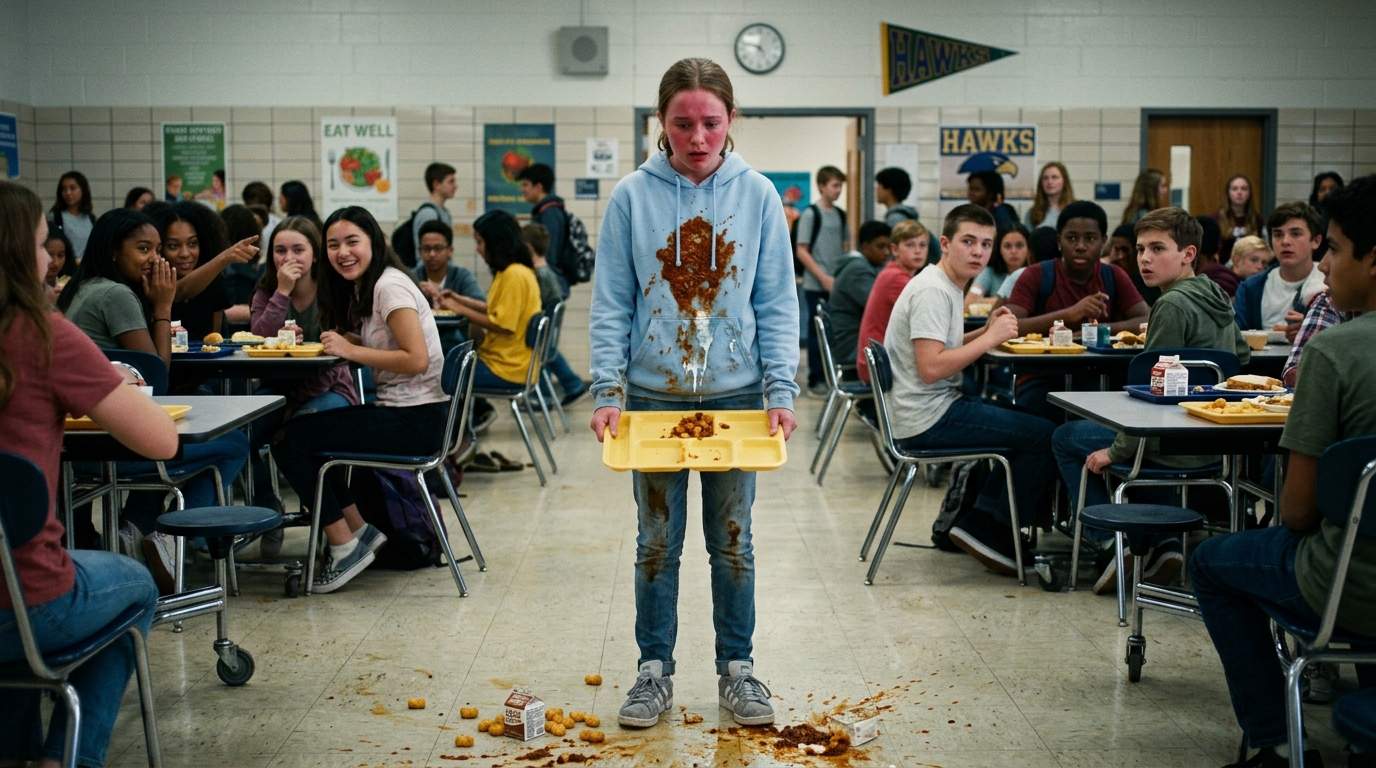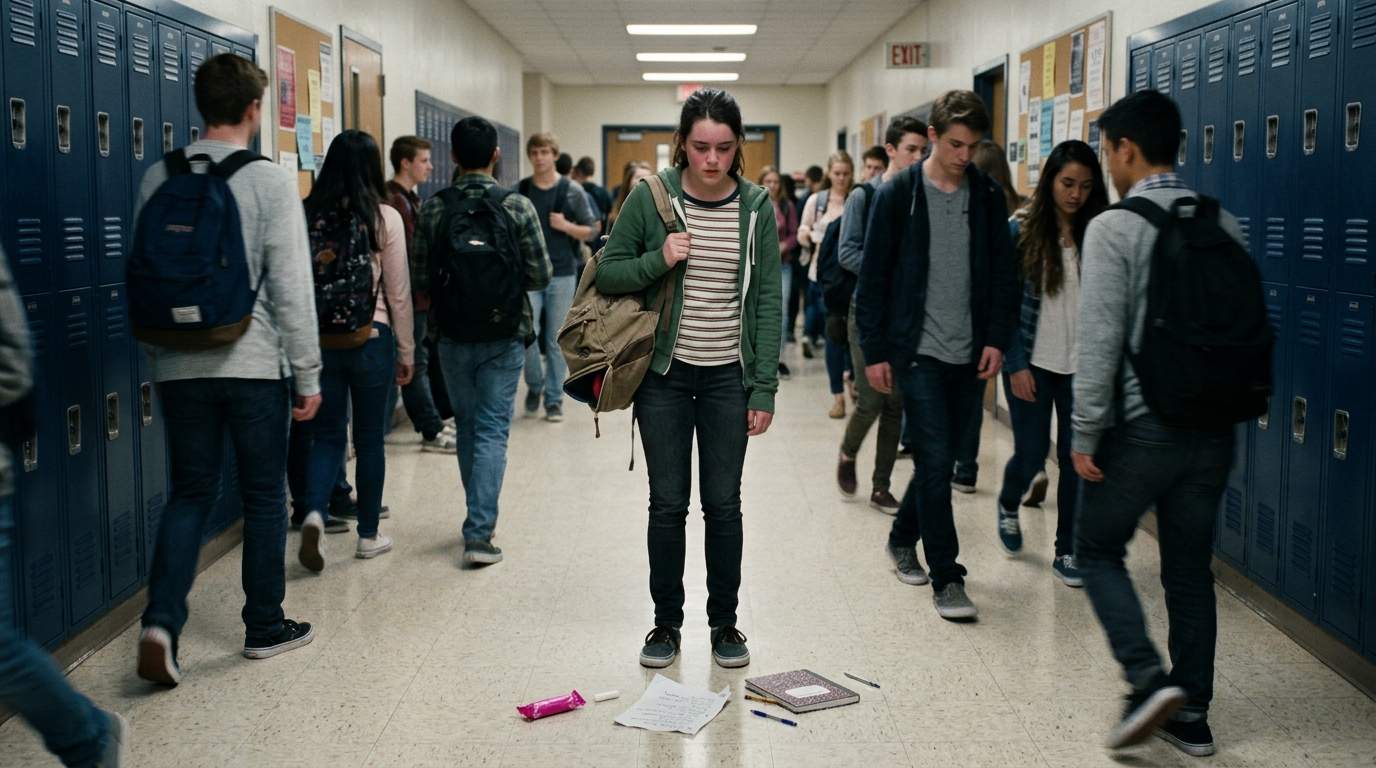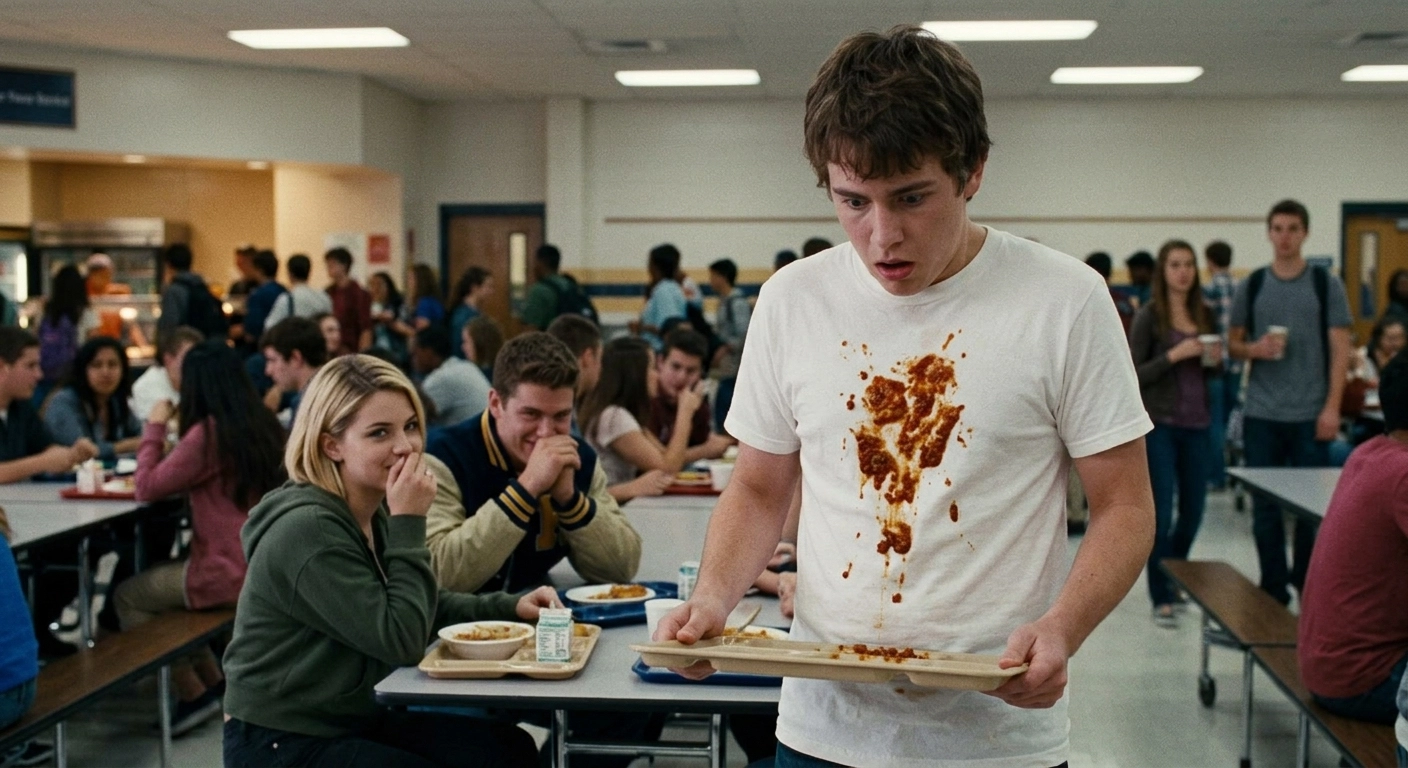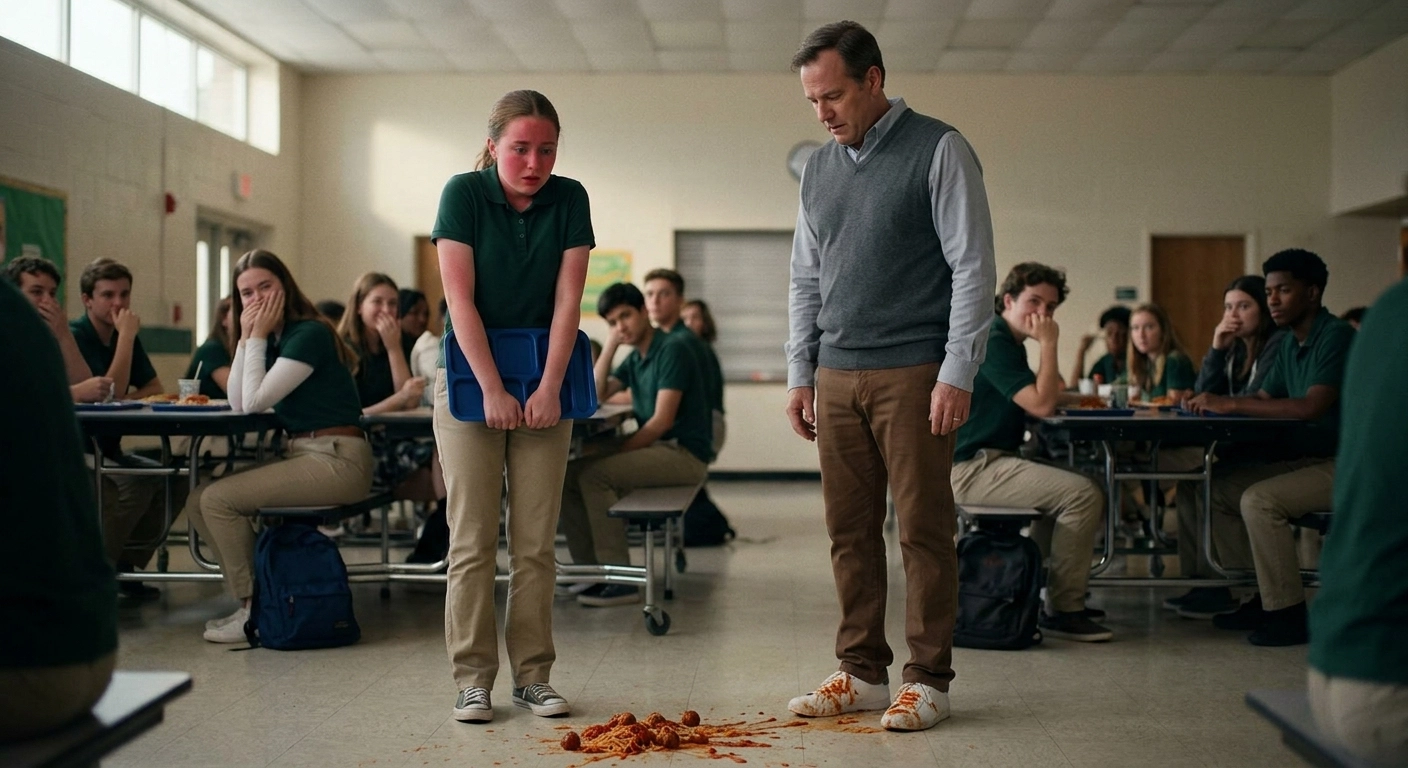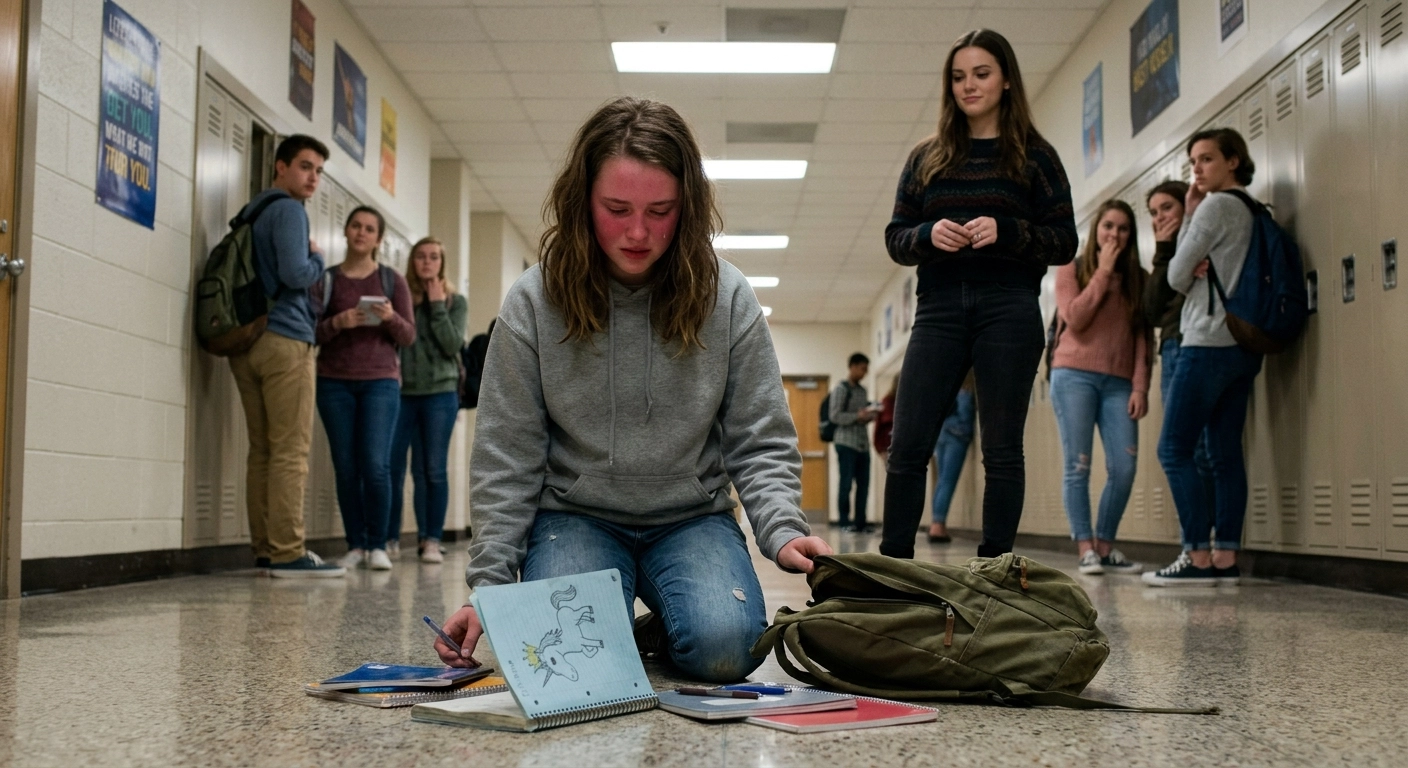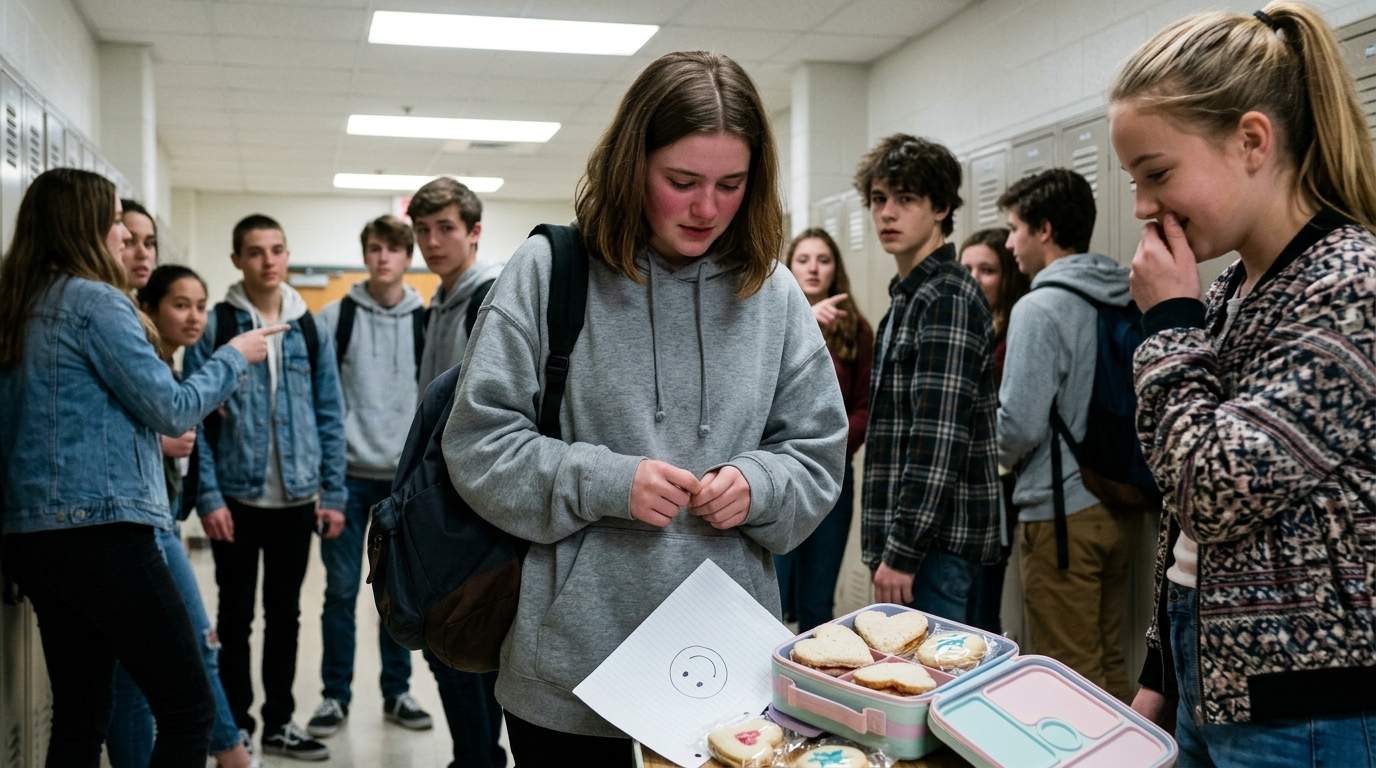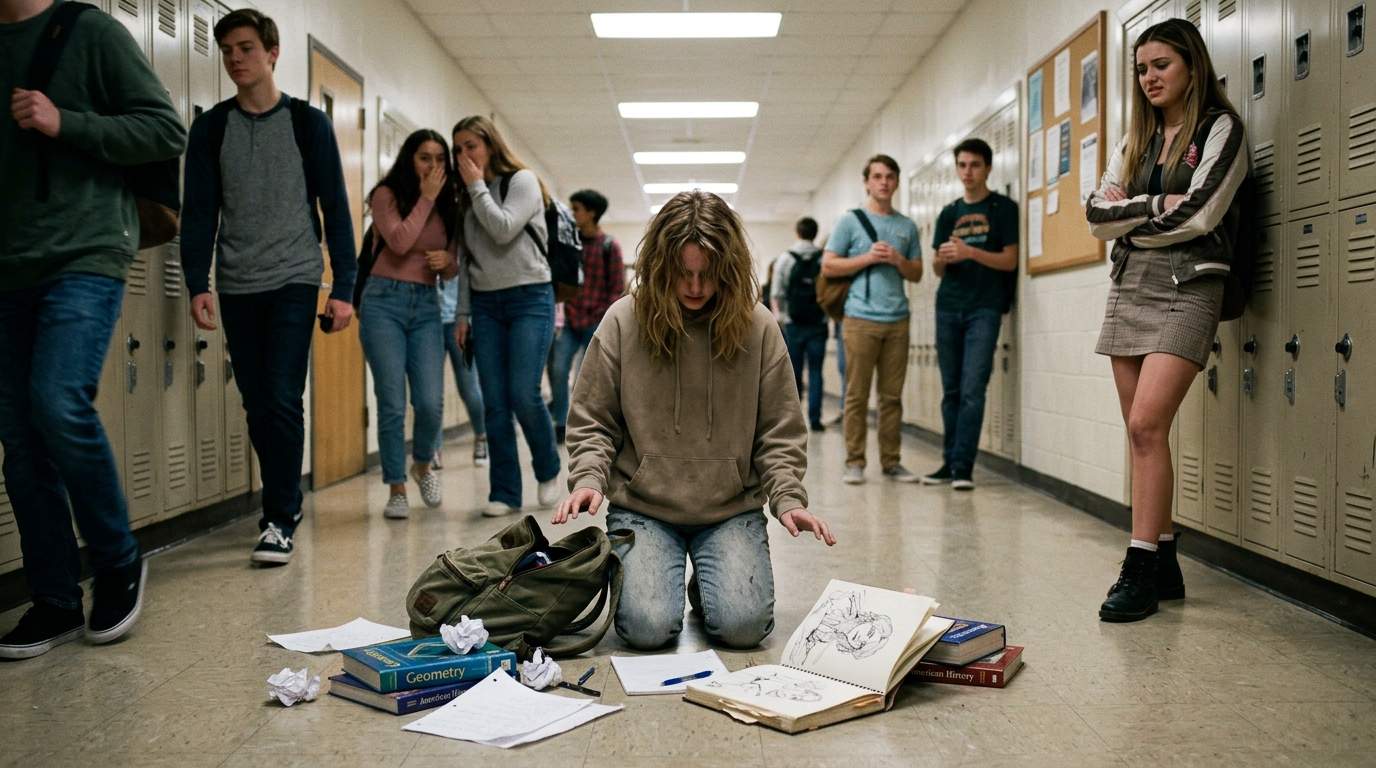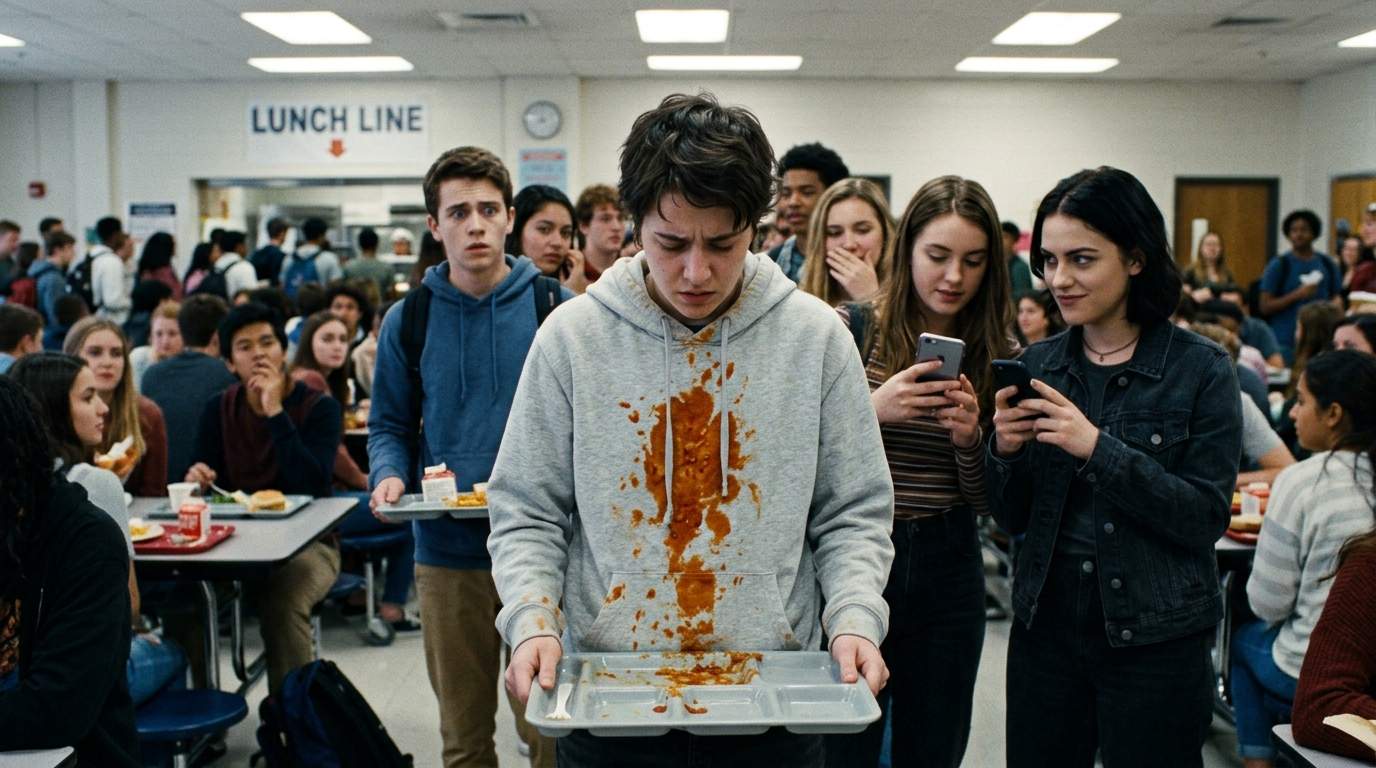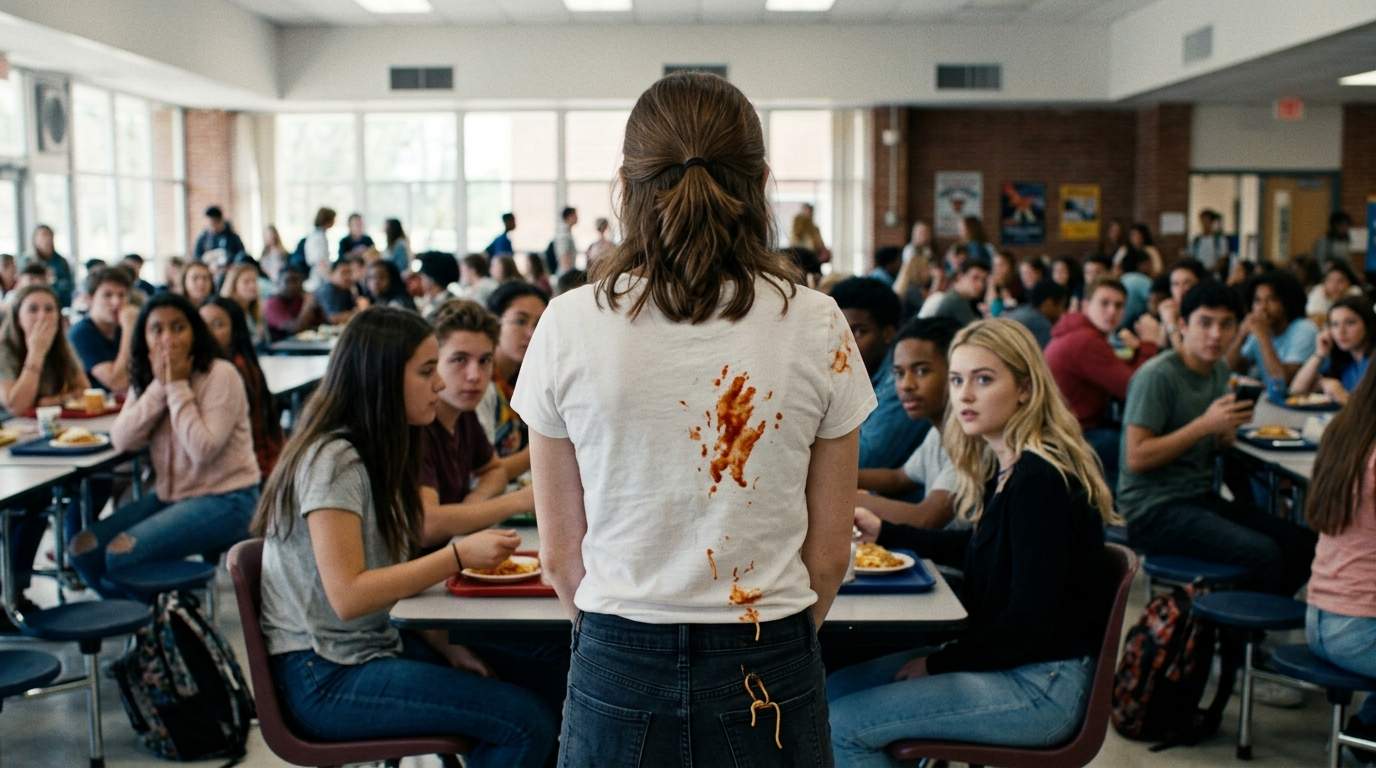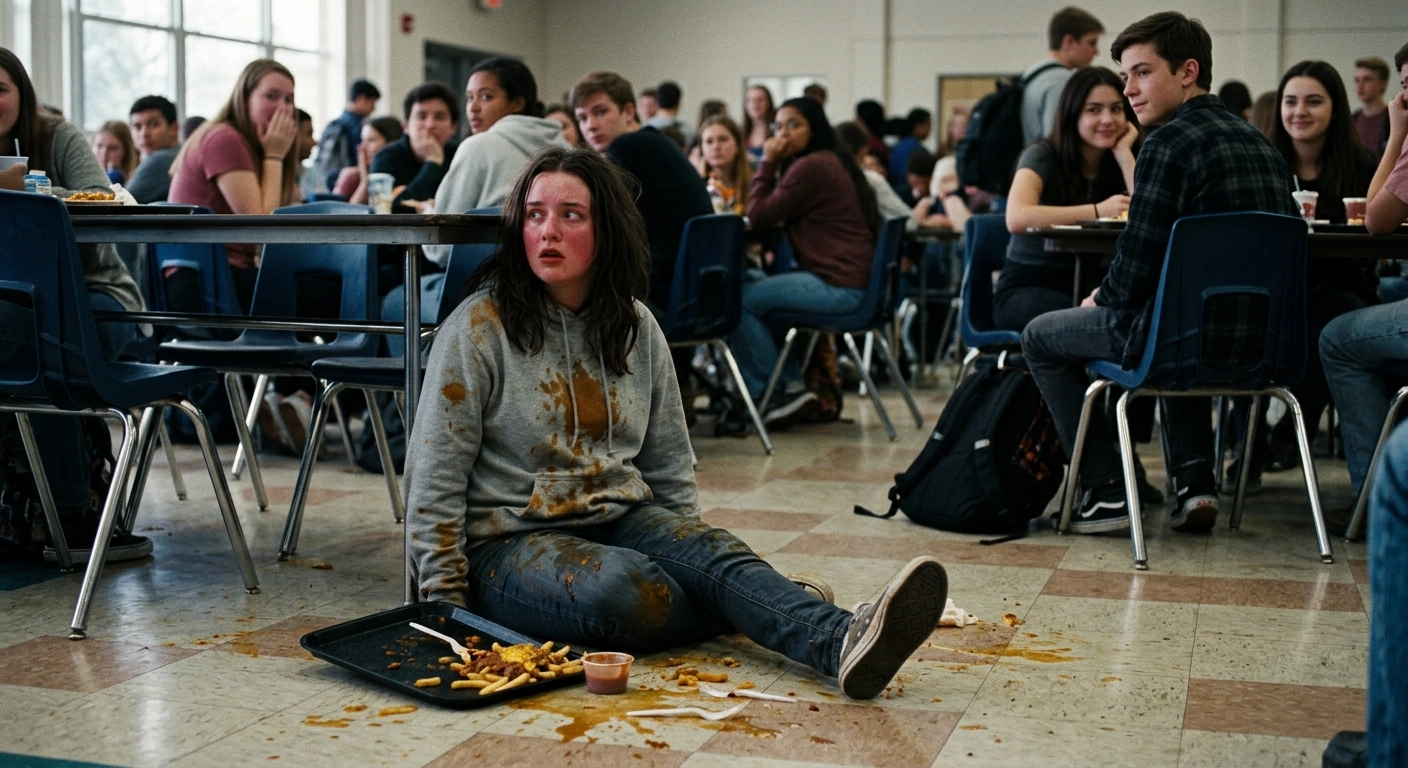
The fluorescent lights of the Chemistry lab always hummed a specific, annoying buzz, a sound that usually faded into the background of my thoughts. I hated Chemistry, not because of the subject matter, but because of the oppressive quiet that made every minor sound, every fidget, feel amplified. I was never particularly popular at Northwood High, more of a quiet observer, blending into the periphery, which was mostly how I preferred it. There was a small group of us, including Maya and Liam, who were assigned to the same lab bench group for the entire semester. Maya was a perfectionist, always neatly dressed, meticulously organized, and rarely spoke unless prompted by the teacher, Mr. Harrison. Liam, on the other hand, was the kind of guy who effortlessly moved between different social circles, always had a witty comment, and possessed a casual arrogance that sometimes felt dismissive. Mr. Harrison was a good teacher in theory, knowledgeable and passionate, but he also seemed perpetually distracted, often engrossed in grading papers or setting up experiments while the class settled in. He rarely noticed the subtle social dynamics playing out, the quiet exclusions, the sideways glances, the micro-aggressions that formed the undercurrent of our adolescent lives. I remember walking into class that morning with a vague sense of unease, a feeling that had become a constant companion throughout high school. No one had said anything directly, but I had noticed Maya and another girl from our group, Chloe, sharing a quick, conspiratorial glance earlier by the lockers. It wasn't anything concrete, just a fleeting moment, but it had pricked at my already fragile sense of belonging. I tried to shake off the feeling, telling myself it was nothing, just my usual paranoia, a common refrain in my internal monologue. I knew the chairs in the Chemistry lab were old, some of them visibly wobbly, their plastic backs faded and scratched from years of student abuse. We had even joked about them a few times, wondering which one would finally give out, a morbid sort of gallows humor that made the situation feel less threatening. I reached my assigned bench, number four, right beside Maya’s meticulously neat station, and took a deep breath. I slung my heavy backpack from my shoulder, letting it thud softly against the metal leg of the lab bench. The plastic chair at my spot looked no different from any other, certainly no worse than the one I had sat on yesterday or the day before. I hesitated for a fraction of a second, an almost imperceptible delay, before committing to the familiar motion of sitting down. My focus was on placing my thick textbook carefully onto the glossy white lab surface, avoiding any scuffs. The chair beneath me emitted a familiar, dry creak as I began to lower myself, a sound that blended seamlessly into the general low hum of the classroom. I was almost fully seated, my weight shifting onto the plastic, just that split second before I was completely settled. Then, a sharp, unyielding CRACK erupted, shockingly loud in the otherwise quiet pre-class buzz, utterly distinct from any normal chair groan. My body lurched violently, a sudden, uncontrolled plummet towards the hard, cold linoleum floor. One of the chair's spindly metal legs seemed to buckle and twist with a sickening crunch, giving way completely beneath my weight. I dropped with an undignified, bone-jarring thud, a chaotic tangle of limbs and backpack straps, feeling the cold tiles immediately against my exposed skin. My textbook, which I had just been holding, flew from my grasp in a desperate, chaotic arc, scattering papers across the linoleum like startled birds. A sudden, sharp silence descended upon the room, punctuated only by the lingering reverberations of the breaking plastic and the soft rustle of my falling belongings. My eyes instinctively shot up, wide with a surge of shock and panic, searching for any reaction, any sign that someone had noticed this abrupt, embarrassing descent. Across the aisle, Liam, who always sat with that knowing smirk, slowly lifted his head, his eyes widening almost imperceptibly as he took in the scene of my utter disarray. I felt an immediate, intense heat creep up my neck, a blush that started deep within my chest and surged upwards, burning my cheeks and ears with fierce intensity. The world seemed to tilt on its axis, every single face in the room momentarily frozen in a tableau of surprise or dawning amusement. My breath hitched in my throat, a tiny, ragged gasp that felt incredibly loud in the sudden, oppressive quiet. I could feel the jagged edges of the broken plastic digging into my hip and thigh, a physical reminder of the spectacular collapse. My gaze snagged on Maya’s face, which for a fleeting second showed a flicker of something, maybe pity, maybe mild shock, before her eyes quickly darted away, back to her carefully organized pens, meticulously avoiding my gaze. Liam, however, held my stare for a fraction longer, a subtle, almost imperceptible widening of his eyes, before a tiny corner of his mouth twitched upwards. My mind was a dizzying blur of panic and overwhelming shame, unable to process the immediate aftermath of this sudden, public collapse. The very air around me seemed to thicken, pressing down on my chest, making it hard to draw a full breath. I lay there, half-sprawled, utterly exposed, acutely aware of the sudden, unwanted attention of everyone in the room. A few soft titters started from the back of the room, like dry leaves rustling, quickly picked up by a couple of girls closer to the front. I saw one girl, Sarah, quickly bring her hand up to cover her mouth, her shoulders shaking with suppressed laughter. Another student, a guy I didn't even know, subtly lifted his phone, pretending to check the time but clearly angling it in my direction. Maya, still looking away, shifted uncomfortably in her own perfectly intact chair. No one rushed to help, no one asked if I was okay, just a sea of curious, or worse, amused, faces. Mr. Harrison, finally noticing the unusual quiet and then the distinct clatter, looked up from his desk, his brow furrowed in mild confusion. “Everything alright over there?” he asked, his voice a little too loud, drawing even more attention to my predicament. My face burned even hotter, a painful, stinging sensation, as I tried to quickly gather my scattered papers with trembling hands. I felt the weight of every single eye on me, the public spectacle of my humiliation, the exposed vulnerability of my limbs splayed on the dirty floor. I mumbled a barely audible, “Yeah, fine,” scrambling clumsily to my feet, trying to ignore the way my muscles protested, trying to act like nothing had happened. The broken chair lay in pieces around me, an undeniable monument to my public failure, a testament to the fact that I had just fundamentally disrupted the order of the classroom.
The shock quickly morphed into a searing humiliation, an all-consuming fire that raged beneath my skin. I felt a confusing mix of anger – at the chair, at myself, at the indifferent world – and profound embarrassment. It was like every nerve ending was exposed, raw and tingling, absorbing the silent judgment and suppressed amusement of my peers. My cheeks felt hot, stiff, and tight, as if I had been slapped repeatedly. I didn't dare make eye contact with anyone, keeping my gaze fixed on the broken pieces of plastic and metal on the floor as I awkwardly shoved them aside. A cold knot of anxiety tightened in my stomach, a familiar response to feeling utterly out of place and noticed for all the wrong reasons. The incident replayed in my mind on an endless loop, the sudden drop, the crash, the way my books scattered, the awful silence followed by the soft, insidious laughter. It wasn't violent, it wasn't malicious in its direct execution, but it felt like a brutal assault on my already fragile self-esteem. I couldn't shake the feeling that this was just another confirmation of my awkwardness, another moment where I failed to navigate the simple act of existing gracefully. The sense of being utterly exposed, of having my personal moment of clumsiness made into a public spectacle, burrowed deep into my psyche.
That day changed something fundamental within me; I became even more self-conscious, hyper-aware of my movements in public spaces. I started checking chairs meticulously before I sat down, a quick, nervous pat or a subtle wiggle to test their stability. I avoided walking in the middle of hallways, preferring the edges, trying to make myself smaller, less noticeable, less prone to another public incident. The memory of the chair collapsing, the sound of the crack, the feeling of falling, and the subsequent wave of silent, amused stares, stayed with me for years. It was a constant, low-level hum of anxiety that sometimes flared into full-blown panic when I felt even slightly off-balance or stumbled. It wasn’t just about a broken chair; it was about the public exposure, the immediate sense of being "othered," and the crushing realization that sometimes, when you’re already on the fringes, the universe conspires to push you further out, and very few people will reach out to catch you. It taught me that social humiliation could be silent, almost invisible, yet leave a lasting scar, a quiet reminder that the world sometimes watches, unfeeling, when you fall.