The beeping of the machines was my constant companion, a rhythm of life I was barely holding onto.
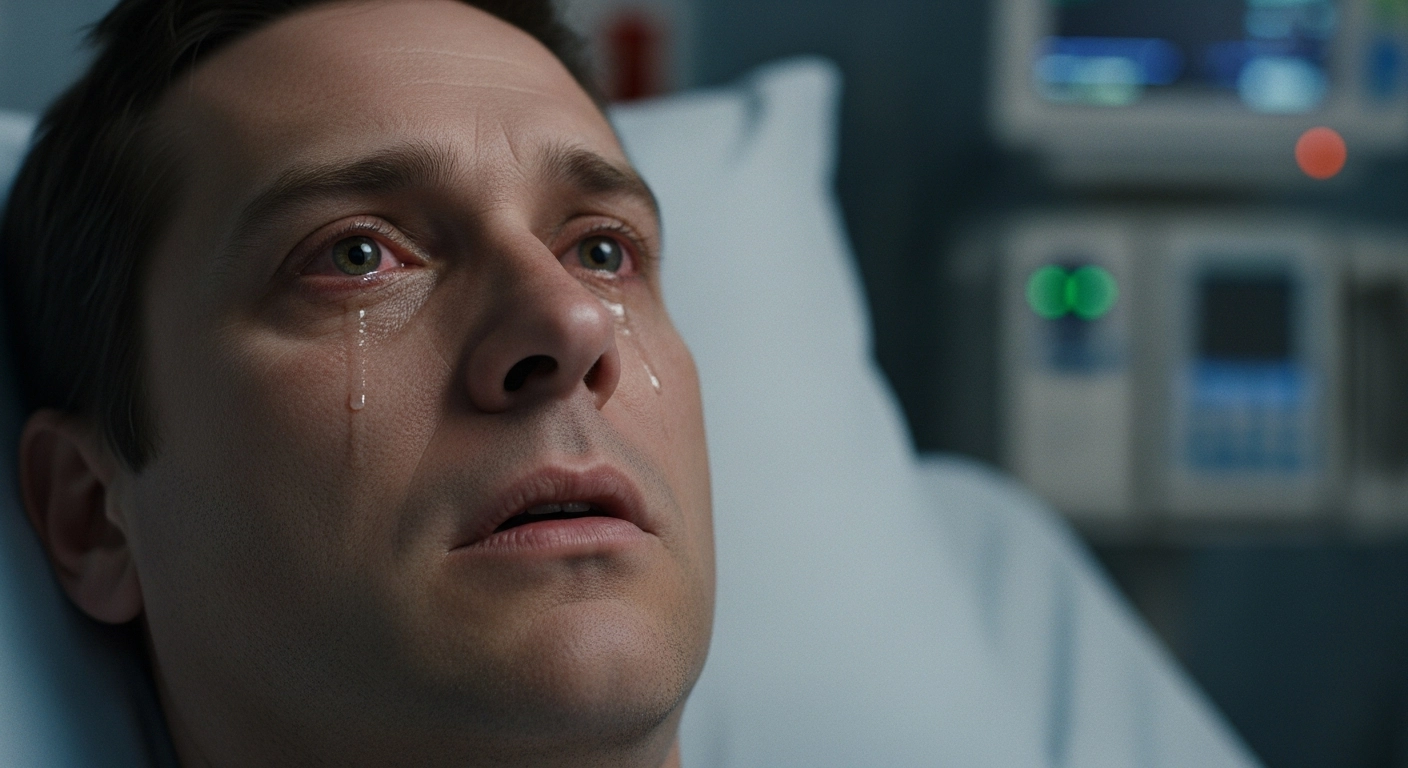
I lay in that hospital bed, a shell of myself, the world a blurry, pain-filled haze.
A catastrophic accident had left me broken, clinging to consciousness by a thread.
They told me I was lucky to be alive, but luck felt like a cruel joke in those moments.
My body was a battlefield, every muscle screaming, every breath a monumental effort.
I couldn't speak, couldn't move much beyond a twitch of a finger or a flutter of my eyelids.
My family was supposed to be my anchor, my beacon in the storm.
My brother, David, was always the first one by my bedside.
He’d sit for hours, sometimes reading, sometimes just staring out the window.
At first, I felt a surge of warmth, a primal comfort knowing he was there.
He brought flowers, little gifts, and whispered words of encouragement.
“You’re going to pull through this, Mark,” he’d say, his voice soft.
But something shifted in his eyes, a subtle change I couldn't quite pinpoint.
It began slowly, almost imperceptibly, a coolness creeping into his demeanor.
He started asking the nurses more detailed questions about my prognosis, about "what if."
I could hear snippets, "chances of recovery," "quality of life," "long-term care."
My heart, already weakened, pounded with a new kind of dread.
One afternoon, I was drifting in and out of consciousness, the room dimly lit.
David thought I was fully asleep, lost to the painkillers and the trauma.
He stood by my bed, his back to the door, a strange intensity in his posture.
I could feel his gaze on me, not the loving gaze of a brother, but something colder, calculating.
He leaned closer to one of the monitors, the one displaying my vital signs.
My eyes were barely slits, but I saw his hand.
It hovered, just for a moment, near the complex array of tubes and wires.
Specifically, it lingered near the ventilator, the very machine breathing for me.
A sudden jolt of terror shot through my entire being.
My breath hitched, a silent, desperate gasp trapped in my chest.
He muttered something under his breath, almost too soft to hear.
"It's for the best, Mark," he whispered, "for everyone."
My blood ran cold, colder than any hospital room.
He thought I couldn't hear him, couldn't feel his presence.
He thought I was as good as gone, a mere obstacle.
I watched, paralyzed, as his fingers, so familiar, so much like my own, twitched.
They moved closer, closer to the release button, to the valve.
My heart hammered against my ribs, a frantic drum against impending doom.
I tried to scream, to cry out, to move, anything to stop him.
But my body refused, a traitorous cage holding me captive.
Only my eyes, wide with unspeakable horror, bore witness to his monstrous intent.
His face was a mask of strained composure, but I saw the greed, the desperation, beneath it.
He thought he was being subtle, that no one would ever know.
The truth slammed into me with the force of a physical blow.
My own brother, the one who sat by my side, was planning to end my life.
All for the inheritance, for the property we had always squabbled over.
The family fortune, the legacy our parents had built.
It was all clearer than any doctor’s diagnosis.
He saw me as an inconvenience, an expense, a roadblock to his own ambitions.
A profound, sickening wave of betrayal washed over me, drowning out the pain of my injuries.
My eyes brimmed with tears, silent streams tracking pathways through the dirt and sweat on my face.
He looked around, perhaps checking for nurses, before his hand tightened slightly.
Then, just as his finger grazed the switch, the door creaked open.
A nurse walked in, clipboard in hand, a cheerful "Good afternoon, David!" breaking the suffocating silence.
David recoiled instantly, his hand dropping as if burned.
He spun around, a forced smile plastered on his face, "Just checking on him, nurse."
The nurse nodded, oblivious, and began adjusting my IV.
I lay there, utterly shattered, my world ripped apart by the man I trusted most.
The trauma of the accident paled in comparison to the wound my brother had inflicted.
How could I ever look at him the same way again?
How could I live knowing what he had almost done?
The beeping of the machines no longer felt like life, but a ticking clock of terror.
My fight for physical recovery suddenly had a new, more terrifying dimension.
I wasn't just fighting for my life; I was fighting against my own blood.
The next few days were a blur of internal agony and silent vigilance.
I slowly regained enough strength to signal, to mouth words, to write.
The truth, once revealed, sent shockwaves through our family.
It tore us apart, piece by agonizing piece.
My parents, heartbroken, struggled to comprehend.
David denied everything, painted me as delusional, confused by medication.
But I had seen it, felt it, survived it.
The police were involved, then lawyers, a messy, public ordeal.
Our family name, once revered, became synonymous with scandal.
The bond with my brother, once unbreakable, was shattered beyond repair.
I survived the accident, but a part of me died in that hospital room.
The part that believed in unconditional family love.
The part that trusted, completely and without question.
Every day, I look at the scar on my chest, a reminder of the physical battle.
But the deeper wound, the one carved by my brother’s betrayal, remains unseen.
It’s a constant ache, a phantom pain that never truly fades.
And I wonder, will I ever truly heal from this?