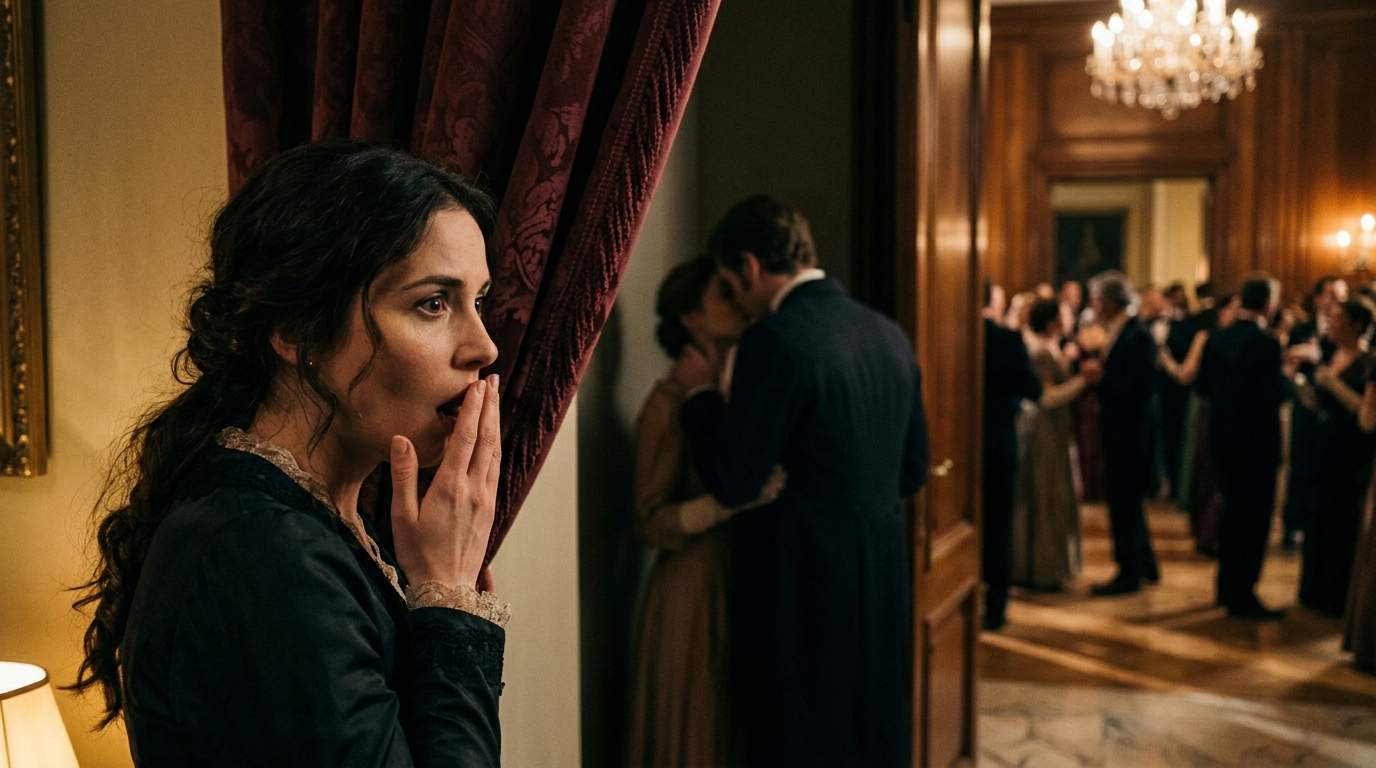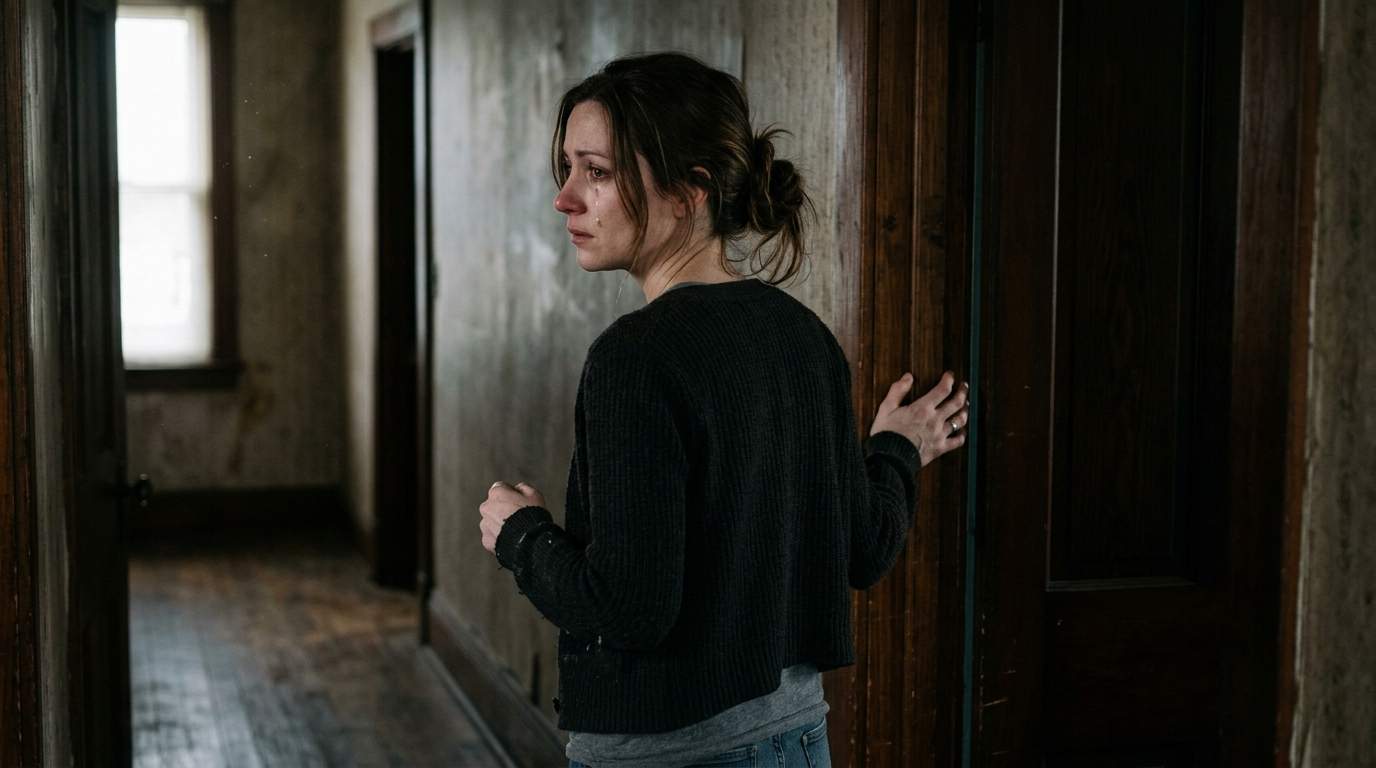
My grandmother, Clara, was a mystery wrapped in lace and lavender.
She passed away last spring, leaving me her sprawling, old mansion on the outskirts of town.
I’d always loved that house, but it always felt like it held secrets in its dusty corners.
After the funeral, I moved in, eager to start fresh but also a little overwhelmed by its size.
Weeks turned into months of organizing and cleaning, rediscovering parts of the house I barely remembered from childhood visits.
One rainy afternoon, I was cleaning out the library, a room my grandmother rarely let anyone into.
She always said it was "too precious" for grubby hands, a sentiment I now understood more deeply.
Behind a heavy bookshelf, covered by years of dust and cobwebs, I noticed a faint outline on the wall.
It wasn’t just a patch of plaster; it was a door, expertly camouflaged.
My heart started to pound with a mix of fear and exhilarating curiosity.
I remembered Clara’s strange, fleeting expressions whenever I’d stray too close to that section of the library.
With trembling hands, I ran my fingers along the hidden seam, searching for a latch or handle.
It took me an hour, but I finally found a tiny, almost invisible button disguised as a decorative rivet.
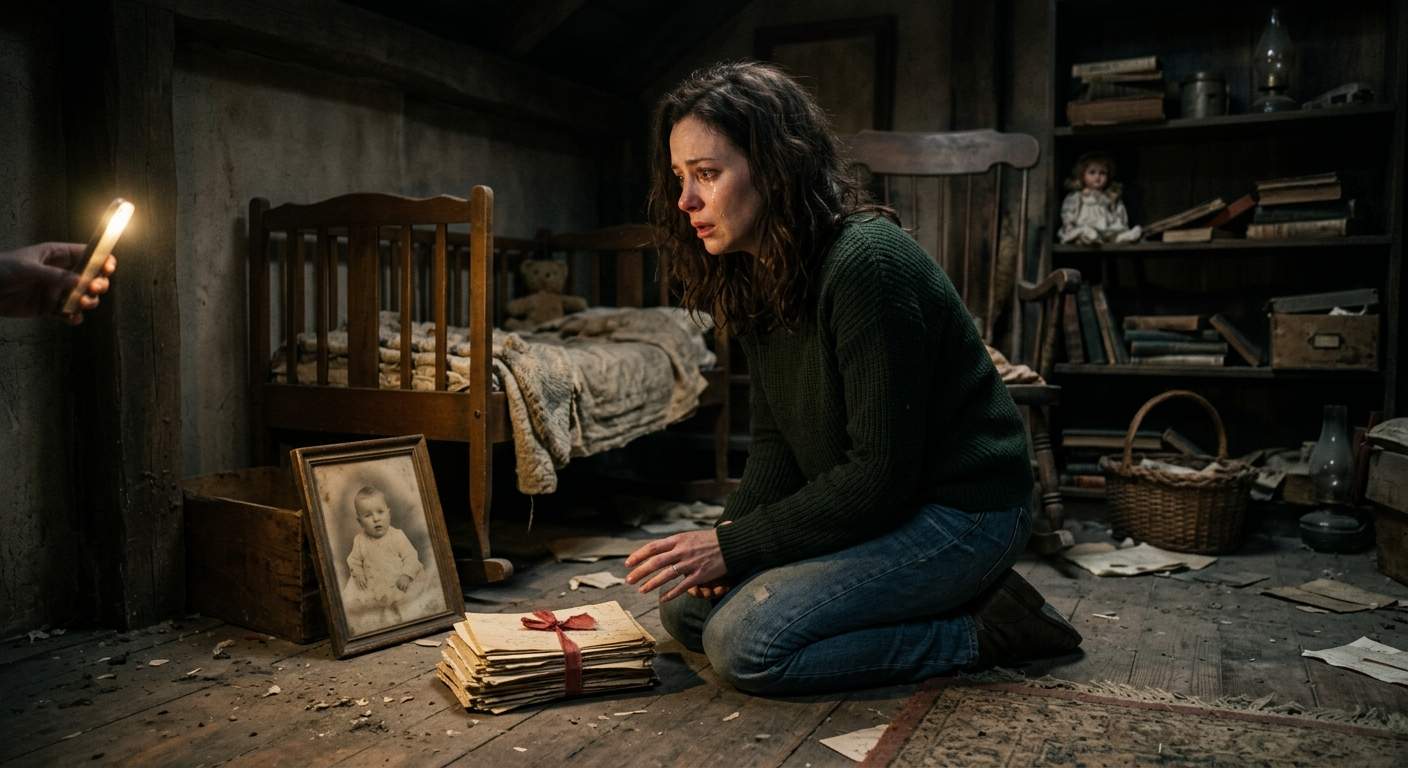
With a soft click, a section of the wall slid inward, revealing a dark, narrow passageway.
The air inside was stale and heavy, carrying the scent of old paper and something else I couldn't quite place.
I grabbed my phone for its flashlight and stepped into the unknown, my breath catching in my throat.
The passageway led to a small, windowless room, clearly meant to be hidden from the world.
It was sparsely furnished but meticulously preserved, like a time capsule.
There was a small wooden crib, perfectly made, with a faded, hand-stitched blanket tucked inside.
Next to it sat a rocking chair, a child's tiny wooden horse, and a dusty pile of books.
My flashlight beam danced across faded wallpaper adorned with playful animals.
Then I saw it, on a small bedside table: a framed photograph.
It was my grandmother, Clara, much younger, cradling a baby.
But the baby wasn't my mother, nor any aunt or uncle I knew.
This baby had different features, a different sparkle in its eyes, a different essence.
My eyes then fell upon a stack of yellowed letters, tied with a delicate silk ribbon.
The handwriting was unmistakably Clara’s, elegant and flowing.
I picked up the top letter, dated decades before my mother was born.
It was addressed to "My Dearest Eleanor," a name I had never heard in our family.
The letter spoke of love, longing, and a profound, heartbreaking sacrifice.
It detailed Clara’s secret life, a forbidden love, and a child she had to give away to protect her family's reputation.
Eleanor. My grandmother had a secret daughter, my mother’s older sister, who was raised by another family.
The letters described Eleanor’s life, her growth, her beauty, her kindness, all from a distance.
Clara had watched her from afar, never able to acknowledge her, never able to hug her.
My grandmother, the stoic matriarch, had carried this unbearable sorrow for decades.
I found adoption papers, birth certificates, and even a small lock of blonde hair.
My head spun; everything I thought I knew about my family was a meticulously constructed lie.
My entire lineage, my identity, was built on a foundation of silence and sacrifice.
Clara wasn't just my grandmother; she was a woman who lived a double life, a life brimming with a love she couldn’t claim.
The weight of this secret pressed down on me, heavy and suffocating.
I realized the mansion wasn’t just full of dust; it was full of ghosts, of unspoken words, of a love denied.
The pain in those letters, the quiet desperation, echoed through the silent room.
I felt a profound empathy for Clara, and an equally profound sense of betrayal.
My mother, my aunts, my uncles—did they know?
Had they also carried this burden, or were they just as oblivious as I had been?
The implications stretched out before me, vast and terrifying.
Who was Eleanor now?
Was she alive?
Did she ever wonder about her birth mother?
This hidden room wasn't just a physical space; it was a gaping wound in our family history.
It shattered the idyllic image I had of my grandmother, replacing it with a complex, tragic figure.
My grandmother’s secret wasn't just hers anymore; it was mine, and I didn't know what to do with it.
It felt like my past, my present, and my future had all been irrevocably altered.
This mansion, once a symbol of family legacy, now felt like a mausoleum of secrets.
I sat there for hours, the old letters scattered around me, the crib a silent testament to a life almost lived within these walls.
My world, once solid, now felt like shifting sand.
Every family gathering, every holiday, every shared story now felt hollow, incomplete.
How do you reconcile the woman you loved with the woman who harbored such a monumental secret?
The silence of the hidden room was deafening, filled with the echoes of a lost child and a mother’s enduring heartbreak.
I couldn’t just put the secret back behind the bookshelf; it had seeped into my very being.
This discovery was not just a family revelation; it was an existential crisis.
My identity felt blurred, my roots questioned.
The mansion had given up its deepest secret, and in doing so, it had irrevocably changed me.