My childhood home, the small Victorian on Primrose Lane, felt like a sarcophagus that morning, sealing me into my despair.
I had just lost my job at the town library, a casualty of budget cuts that had slowly strangled Willow Creek for years.
The notice from the bank wasn't just a paper; it was the final, devastating pronouncement of my complete failure.
Aunt Mildred, bless her eccentric soul, had bequeathed me the house, but the associated property taxes and mortgage had become an impossible burden.
Every creak of the old house echoed the mounting debt, the missed payments, the phone calls I couldn’t bring myself to answer.
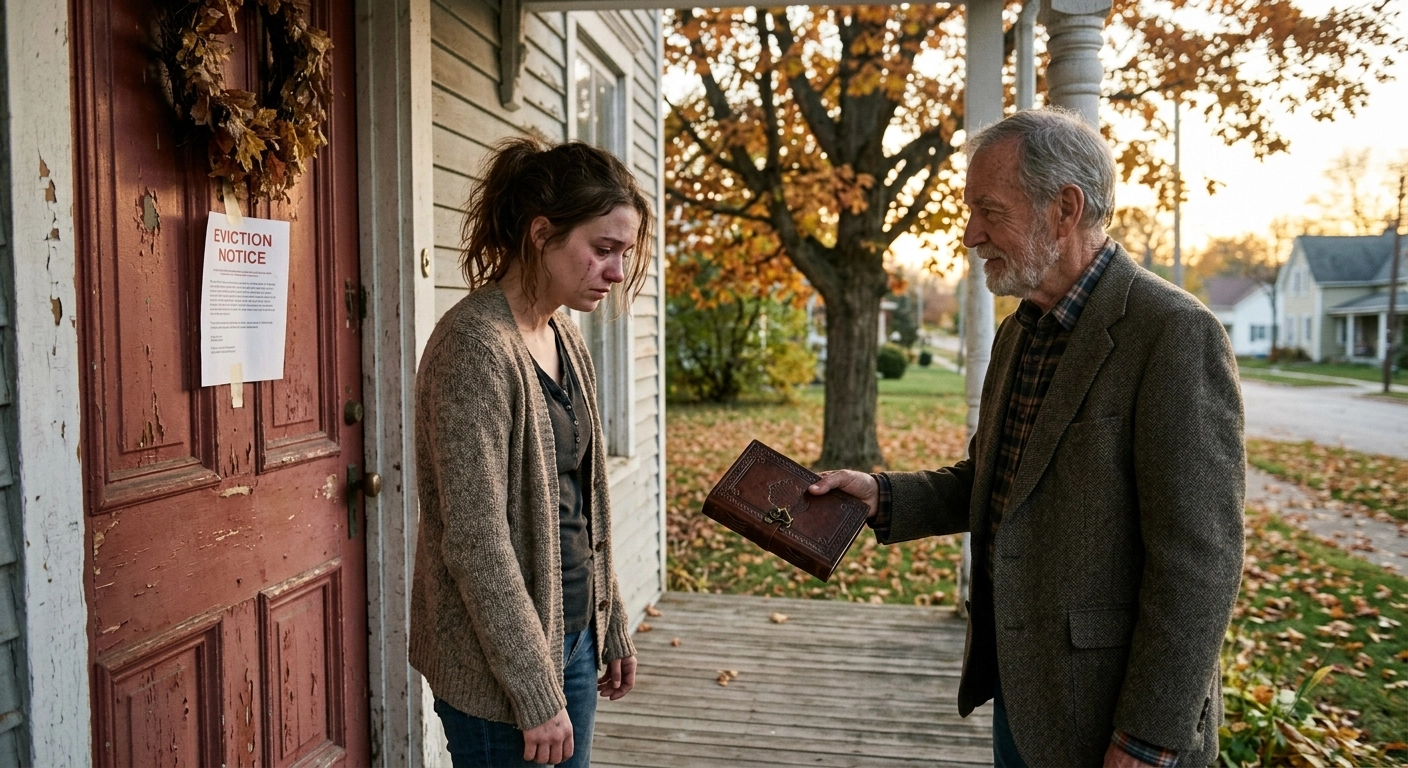
The whispers from neighbors grew louder each day, fueled by the visible signs of my struggles, like the overgrown garden and the flickering porch light.
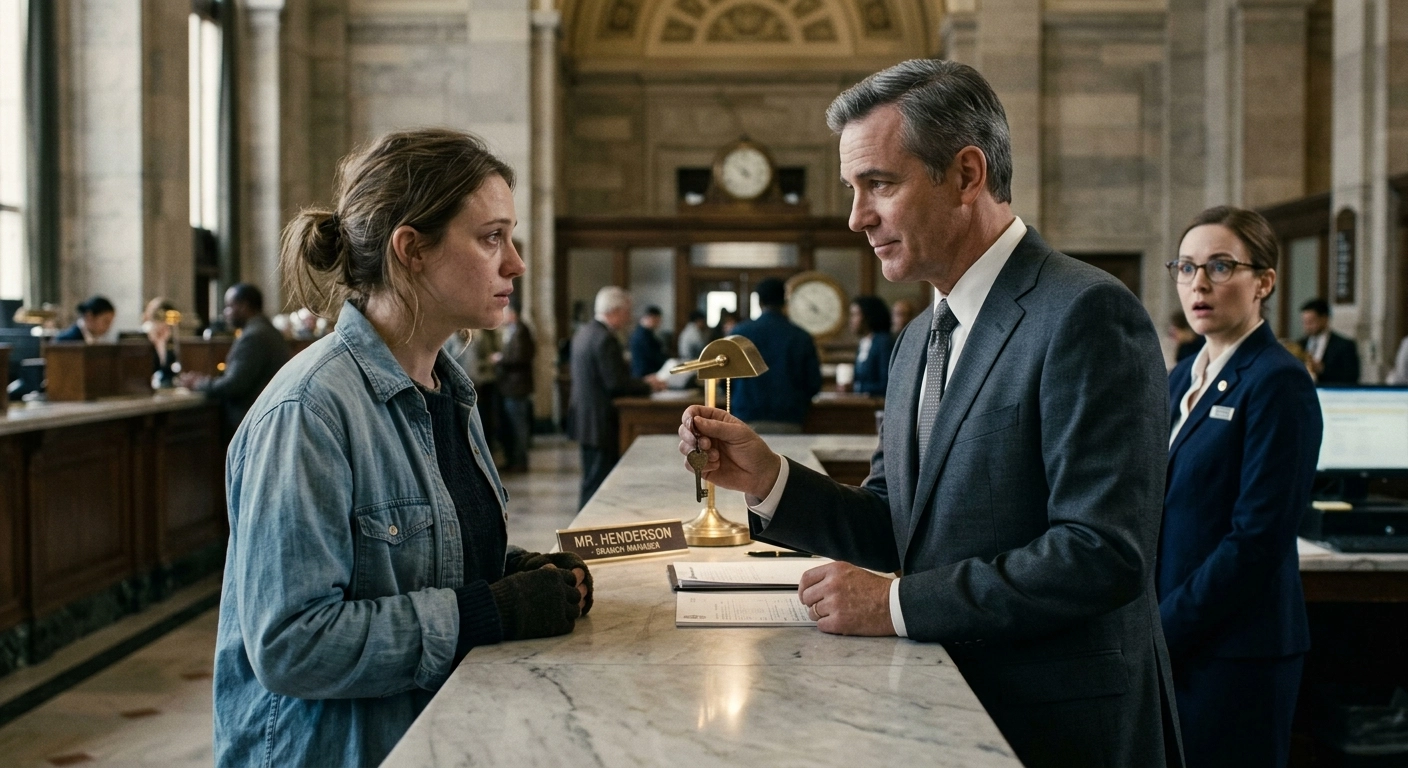
I remembered Mr. Henderson’s words, his eyes holding a depth I hadn't seen before, as I stared at the journal he'd placed in my hands.
Its cover was a deep, aged burgundy leather, embossed with a swirling, unfamiliar crest.
The brass clasp was intricate, a series of interlocking gears that seemed to defy simple opening.
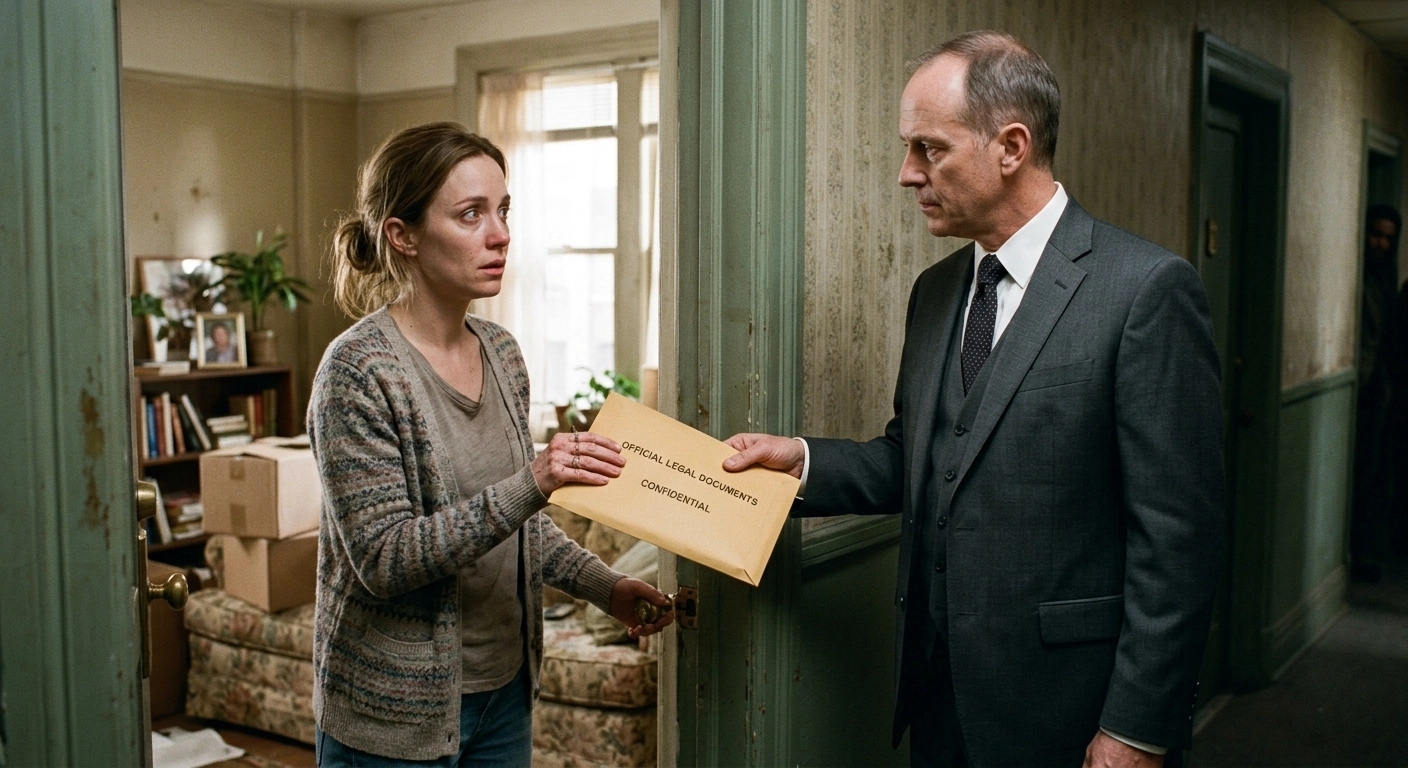
My fingers traced the patterns, ignoring Mr. Davies’ increasingly insistent presence on my porch.
“Ms. Peterson, this is for your signature,” he repeated, holding out a pen, his tone now laced with irritation.
I clutched the journal tighter, a strange, almost primal instinct taking over, and shook my head numbly.
“I need a moment,” I whispered, the words barely audible.
Mr. Davies huffed, clearly annoyed, but stepped back, perhaps sensing my fragile state.
I retreated inside, the heavy door thudding shut behind me, plunging the entryway into a momentary gloom.
The scent of old paper and dried lavender, Aunt Mildred’s signature smell, emanated faintly from the journal.
I ran my thumb over the complex clasp, noticing a tiny, almost invisible indentation.
Pressing it gently, a soft click resonated through the quiet house, and the brass gears smoothly rotated open.
Inside, the pages were filled with Aunt Mildred’s distinctive, looping script, but it wasn't a diary.
It was a meticulously detailed account of the town's history, intertwined with family anecdotes, and peculiar references to “The Willow’s Heart.”
One entry, dated weeks before her passing, stood out, referencing "the old oak in the north pasture holds the truth."
The north pasture was where the developers, the same ones Mr. Davies represented, planned to build a massive commercial complex.
A feverish energy coursed through me, replacing my despair with a burgeoning curiosity.
I spent the next two days pouring over the journal, neglecting food and sleep, driven by an urgency I couldn't explain.
The journal wasn't just a record; it was a map, a puzzle, hinting at something far grander than I could have imagined.
It spoke of a hidden trust, established by my great-grandmother, Eleanor Vance, nearly a century ago.
The purpose: to protect the ancestral lands, including the very ground my house stood on, from any "exploitative commercial development."
The trust was meant to safeguard Willow Creek’s natural beauty and community spirit, explicitly against the kind of corporate takeover now looming.
Aunt Mildred had been the last living trustee, and her will, which seemed so confusing before, was actually a carefully worded trigger for the trust’s full activation upon my inheritance.
The cryptic references in the journal were safeguards, designed to ensure only a true heir, one who cared for the land, would uncover the truth.
The morning of the eviction, just as the moving trucks pulled up, Mr. Henderson appeared again, a quiet smile on his face.
"Did you find it, Sarah?" he asked, his eyes twinkling knowingly.
I held up the journal, now open to the final, crucial page detailing the trust's legal framework and current beneficiaries, which included Mr. Henderson.
"Aunt Mildred had a brilliant mind," I said, a newfound strength in my voice.
The trust stipulated that the land could not be sold for commercial purposes and that a significant portion was to be preserved as a community park.
It also provided a substantial endowment for its upkeep and for the benefit of the town’s residents.
The money that the bank was demanding was a fraction of what the trust actually held, a tactical move by Aunt Mildred to force me to investigate.
When Mr. Davies and the bank’s legal team arrived, their faces confident and unyielding, I met them with calm resolve.
I presented the journal and the notarized documents that Mr. Henderson had quietly retrieved from a hidden safe at the town hall, documents corroborating the trust.
The smiles vanished from the lawyers' faces, replaced by bewildered shock as they reviewed the ironclad clauses.
The eviction was halted instantly, the bank’s scheme crumbling before their eyes.
News of the Vance Family Trust spread like wildfire through Willow Creek, igniting hope where only resignation had been.
The developers’ plans for the commercial complex were legally blocked, forcing them to withdraw their bids.
I didn't just save my home; I helped save the entire north pasture from becoming a concrete jungle.
With the trust's resources, I initiated the "Willow Creek Preservation Project," transforming the threatened land into a beautiful public park and nature reserve.
I established a community fund, using a portion of the trust’s ongoing dividends to support local businesses and revitalize our town square.
The old library, where I had lost my job, was refurbished and expanded, becoming a vibrant community hub.
My relationship with the town shifted dramatically from whispered pity to open gratitude and respect.
People stopped by my porch not to gossip, but to offer thanks, to volunteer for the park, to share ideas for our town's future.
I found my purpose not in quiet despair, but in leading the charge for Willow Creek's renaissance.
Mr. Henderson became my closest confidant, sharing stories of Aunt Mildred’s quiet genius and our family’s enduring legacy.
The house no longer felt like a prison of debt, but a beacon of hope, its doors open to friends and neighbors.
My life, once spiraling into ruin, had reversed completely, proving that sometimes, the greatest treasures are hidden in plain sight, waiting for the right moment to be discovered.
And sometimes, the quiet, eccentric ones hold the most profound truths.