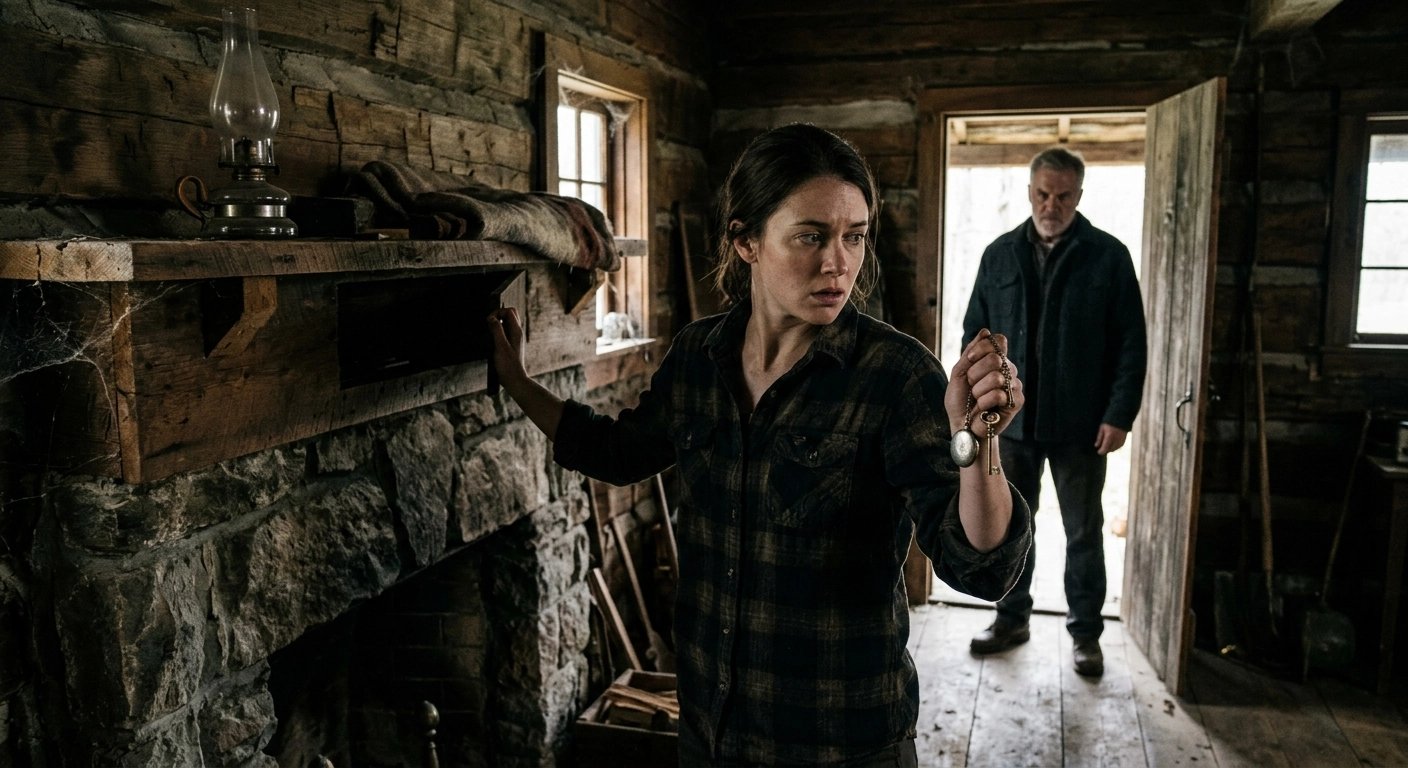
The tremor in my hand was not just from the surprise of finding the hidden compartment but from the unnerving intensity in Mr. Henderson’s eyes.
His unexpected appearance, combined with his proprietary demand, made the small, tarnished silver locket and the ornate brass key feel suddenly far more significant than their humble appearance suggested.
I instinctively took a step back, pulling the items closer to my chest, a defensive reflex born from months of feeling cornered and powerless.
“They’re mine,” I managed to stammer, my voice barely a whisper against the cabin’s oppressive silence.
“They were found on my property.”
Mr. Henderson’s lips thinned into a disapproving line, and he gestured broadly around the dusty, crumbling interior.
“This ‘property,’ Miss Davis, is a historical landmark, whether you recognize it or not.”
“And those particular items are key to understanding its full significance.”
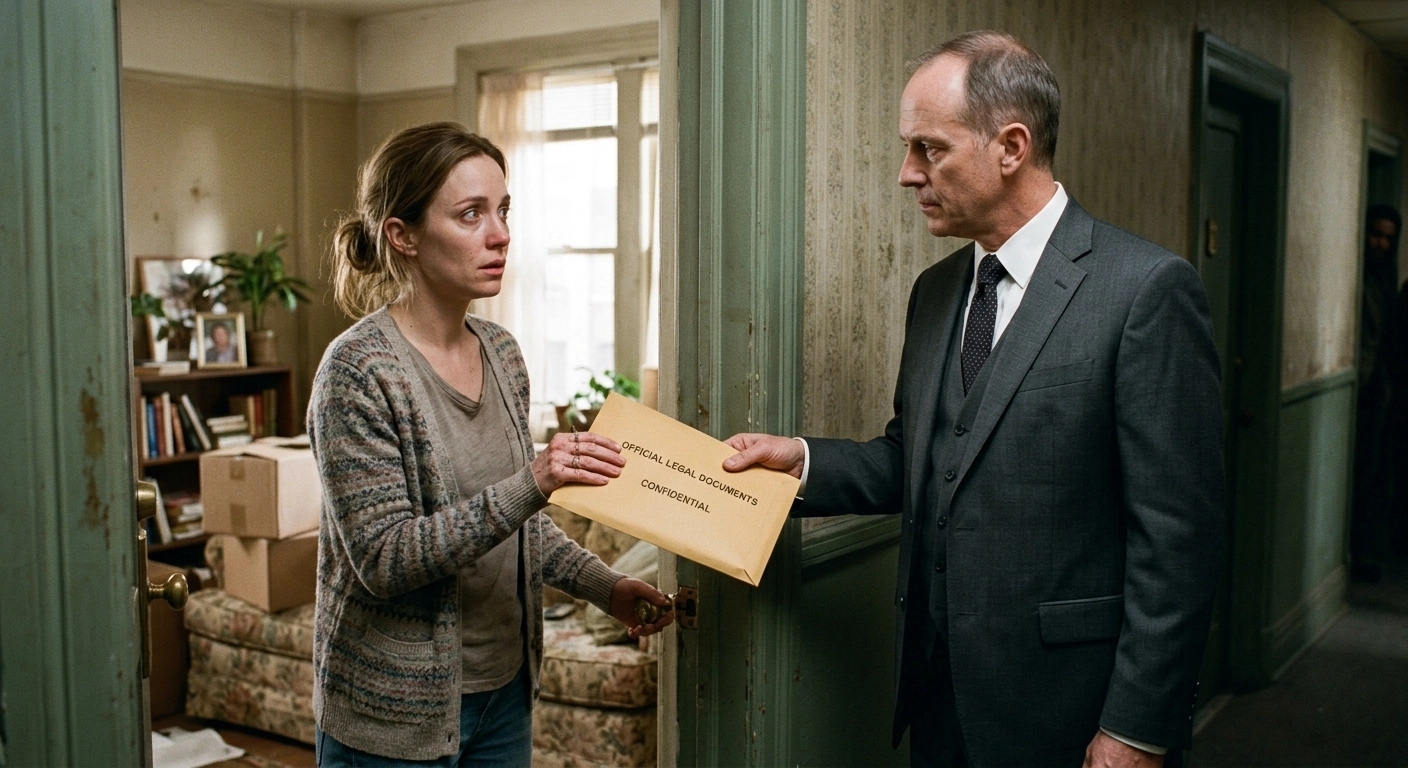
He pulled a folded document from his coat pocket, his movements sharp and deliberate.
“I’ve already contacted the county planning department regarding the structural integrity of this place.”
“It’s a hazard, Emily, and a potential eyesore for our beautiful town.”
The word ‘hazard’ hung in the air, a thinly veiled threat designed to rush me into submission.
I knew the cabin was old and neglected, but a hazard?
It felt like he was manufacturing reasons to strip me of the last fragile thread connecting me to family, even if it was just a pile of decaying wood.
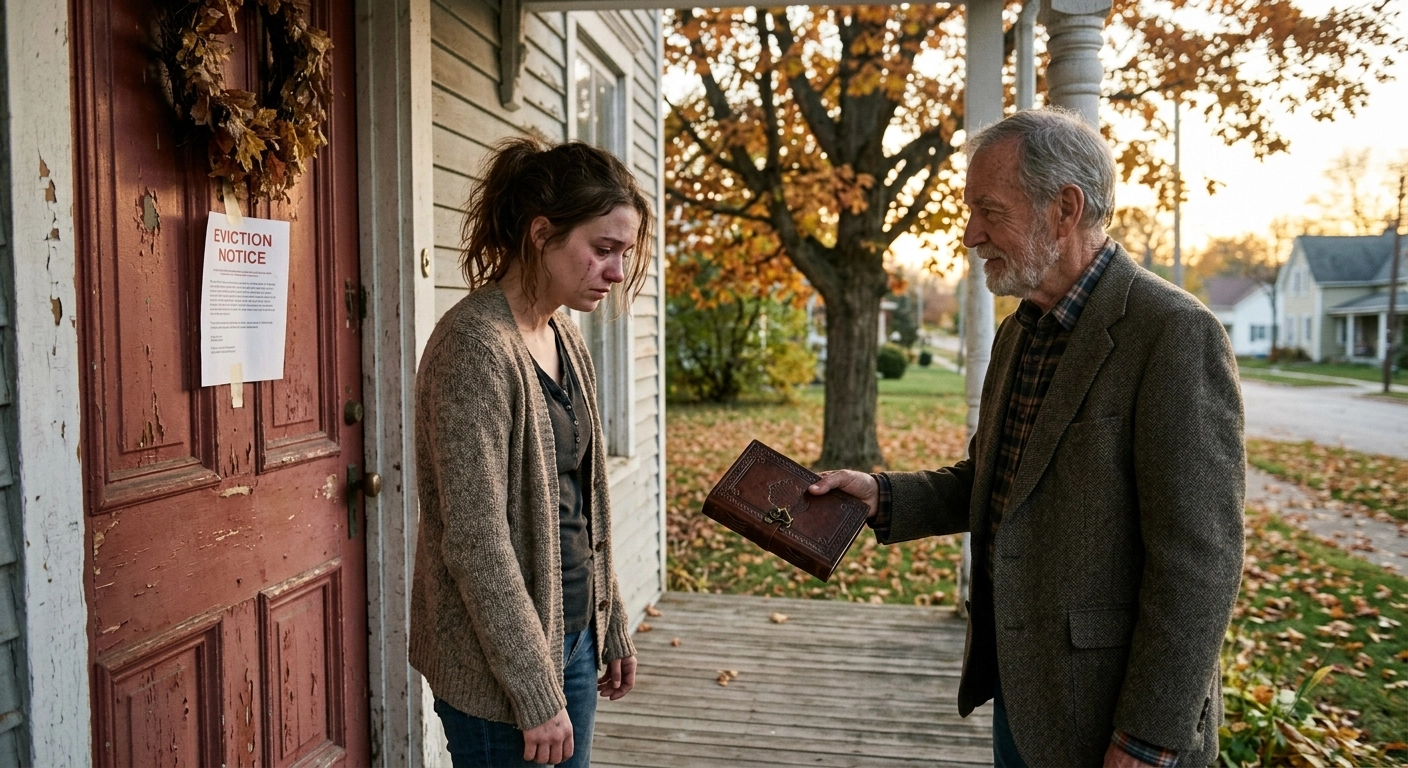
“I have until next week to sort out the property taxes,” I retorted, attempting to sound more confident than I felt.
“After that, it's out of my hands.”
His gaze flickered to the locket and key again, a glint of something unreadable in his eyes.
“Perhaps,” he said, his voice dropping to a conspiratorial whisper, “we could expedite the process if you were to part with those items now.”
“I could ensure a swift, clean transfer of the property, no fuss, no further investigations.”
His implication was clear: hand over the treasures, and he’d make my impending loss of the cabin somehow less painful.
The audacity of his proposition, coupled with the desperation of my own situation, sparked a flicker of defiance within me.
I wasn't a fool; this man clearly knew something I didn’t.
Why else would he be so aggressively interested in a couple of old trinkets from a cabin he dismissed as a hazard?
I clutched the locket and key tighter, refusing to meet his expectant gaze.
“I’ll consider it,” I lied, already knowing I wouldn’t.
He sighed, a sound of theatrical exasperation, but then nodded curtly.
“Very well, Miss Davis, but don’t say I didn’t offer a simple solution.”
He turned and left, his footsteps heavy as he descended the creaking porch steps, leaving me alone with my pounding heart and a newfound sense of unease.
The afternoon light began to fade, casting long, eerie shadows across the cabin’s interior.
I carefully examined the locket: an intricate silver piece, tarnished but still beautiful, with delicate floral etchings.
It felt strangely warm in my palm.
With a soft click, it opened, revealing two miniature portraits inside.
One was of my great-aunt Mildred, younger, her eccentric spark already evident in her lively eyes.
The other was a distinguished-looking man I didn’t recognize, with kind eyes and a scholarly air.
Beneath the photos, a tiny, almost imperceptible inscription was etched: “For the Keepers of the Light, Mildred & Thomas.”
The key was equally intriguing, crafted from brass with an unusually long, slender shank and a complex, almost abstractly designed bow.
It didn't look like any house key I'd ever seen.
My mind raced, trying to piece together Mr. Henderson’s strange behavior and the hidden treasures.
Great-aunt Mildred had always been an enigma, a recluse who corresponded mostly through cryptic postcards.
I remembered vague rumors of her involvement in some local history group, but I always dismissed them as eccentricities.
I decided to take the locket and key to the only place that made sense: the public library in the nearest town, Springwood Creek.
The next morning, armed with a desperate hope and a thermos of lukewarm coffee, I headed to the library.
Librarian Susan Albright, a kind woman with a keen interest in local history, greeted me warmly.
She listened patiently as I recounted the previous day’s events, her brow furrowed in thought.
When I showed her the locket, her eyes widened slightly.
“Mildred Davis,” she murmured, tracing the familiar face.
“And this gentleman… why, that’s Professor Thomas Holloway, a celebrated historian who specialized in pre-Civil War abolitionist movements.”
“He was a prominent figure in the local historical society decades ago.”
Susan then took the key, her fingers running over its intricate design.
“This isn’t just any key, Emily,” she said, her voice dropping conspiratorially.
“This looks very much like a key to a safe deposit box.”
“But not just any safe deposit box; the specific design often indicates a private, perhaps even a ‘legacy’ box at the old Springwood Creek Bank.”
Her mention of the historical society and Professor Holloway made Mr. Henderson’s aggressive interest suddenly fall into place.
He wasn’t just a busybody; he was likely chasing something specific.
Susan helped me search through digitized old newspaper archives.
We uncovered articles about Professor Holloway’s groundbreaking research on the Underground Railroad in Vermont and his close collaboration with an anonymous local “historical consultant” who provided invaluable, detailed insights into specific safe houses and escape routes.
Then, a small article from an old society newsletter caught my eye.
It mentioned the "Keepers of the Light," a clandestine group dedicated to preserving untold local histories, of which Mildred and Professor Holloway were founding members.
The phrase matched the inscription on the locket.
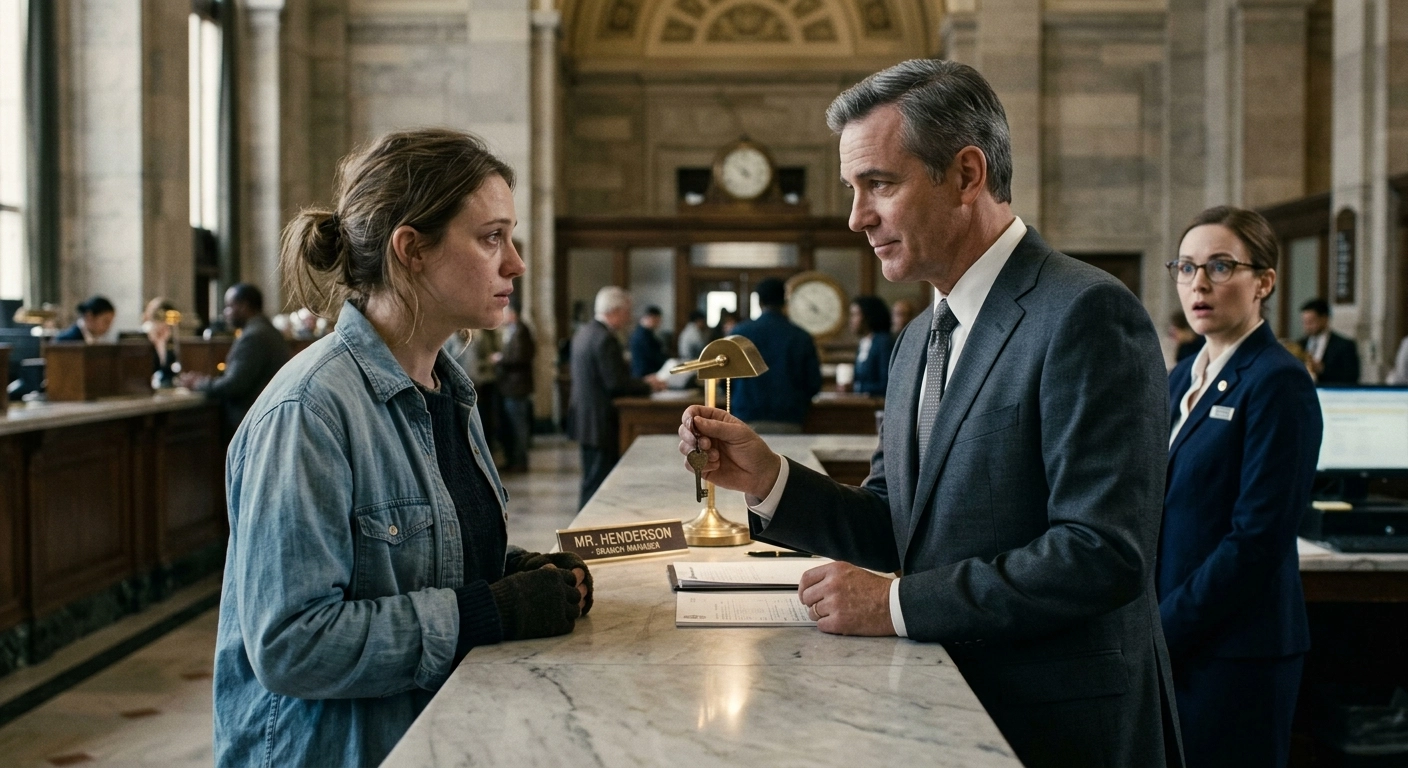
Fueled by a mix of trepidation and growing excitement, I drove to the Springwood Creek Bank, clutching the key.
The stern-faced manager confirmed that yes, there was an old, dormant safe deposit box registered under Mildred Davis’s name, requiring this specific legacy key for access.
My hands trembled as I inserted the key into the lock.
Inside, it wasn't a hoard of cash, but a thick, leather-bound journal, a sealed envelope, and a smaller, exquisitely carved wooden box.
The journal was Mildred’s, filled with her elegant script detailing years of meticulous research, maps, and personal reflections on the cabin’s true purpose: it was a crucial, undiscovered stop on the Underground Railroad.
The sealed envelope contained a legally binding document.
It outlined a charitable trust established by Mildred decades ago, securing the cabin’s preservation as a historical site.
The trust stipulated a substantial annual stipend for a designated "Keeper" – someone of her direct lineage – to act as its curator, maintain the property, and share its history with guided, respectful tours.
The wooden box contained a collection of perfectly preserved, rare artifacts: faded photographs of escaping slaves, a small, handmade quilt with coded patterns, and a hidden compartment with original emancipation papers.
My great-aunt Mildred, the eccentric recluse I barely knew, wasn’t poor or simply odd; she was a brilliant, dedicated preservationist who had silently worked to protect a vital piece of American history.
She hadn't left me just a dilapidated cabin; she had left me a legacy, a purpose, and a home that held far more value than its crumbling walls suggested.
The trust fund meant immediate financial stability, enough to pay off my debts, restore the cabin, and live comfortably while dedicating myself to its cause.
The revelation brought an overwhelming wave of emotion: relief, gratitude, and an immense sense of belonging I hadn't felt in years.
I contacted Mr. Henderson that afternoon, not with fear, but with newfound authority.
I informed him of the trust, the cabin’s historical designation, and my new role as its curator, showing him the official documents.
His face, initially a mask of disbelief, slowly transformed into one of grudging respect, mixed with a hint of chagrin that he hadn't discovered it first.
He had been trying to claim the artifacts for the general historical society, likely without fully understanding the intricate trust Mildred had set up, or perhaps hoping to bypass it.
Over the next few months, my life transformed completely.
The cabin became my sanctuary and my project.
I hired local craftsmen to meticulously restore it, preserving its historical integrity while making it habitable.
The dusty rooms slowly came to life, filled with the warmth of purposeful activity.
I delved into Mildred’s journals, immersing myself in the stories of courage and hope, and became an expert on the cabin’s role in the Underground Railroad.
My guided tours, small and intimate, quickly gained local recognition, drawing visitors from across the state and beyond.
I was no longer the broke, aimless Emily; I was Emily Davis, the Keeper of the Light, a respected curator, and a storyteller of forgotten histories.
The community, once seeing me as a struggling outsider, now looked at me with pride and admiration.
I reconnected with distant relatives who shared stories of Mildred’s quiet passion, further cementing my understanding of her legacy.
The silver locket and the brass key, once symbols of an unknown past, now sat proudly on my mantelpiece, reminders of a turning point that saved me not just financially, but spiritually.
My life, once defined by loss and debt, was now rich with purpose, connection, and a profound sense of belonging.