My world had shrunk to the four peeling walls of my rented apartment, threatening to collapse entirely.
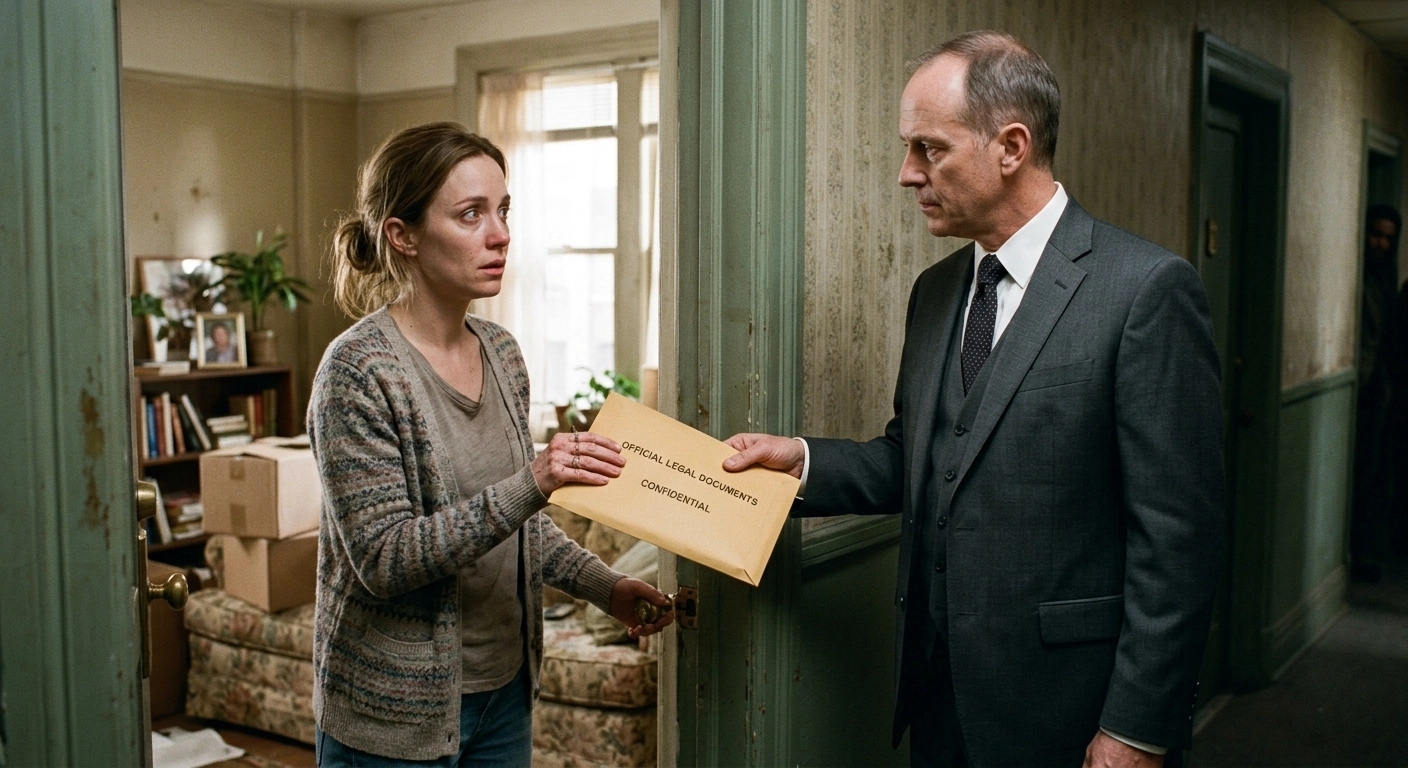
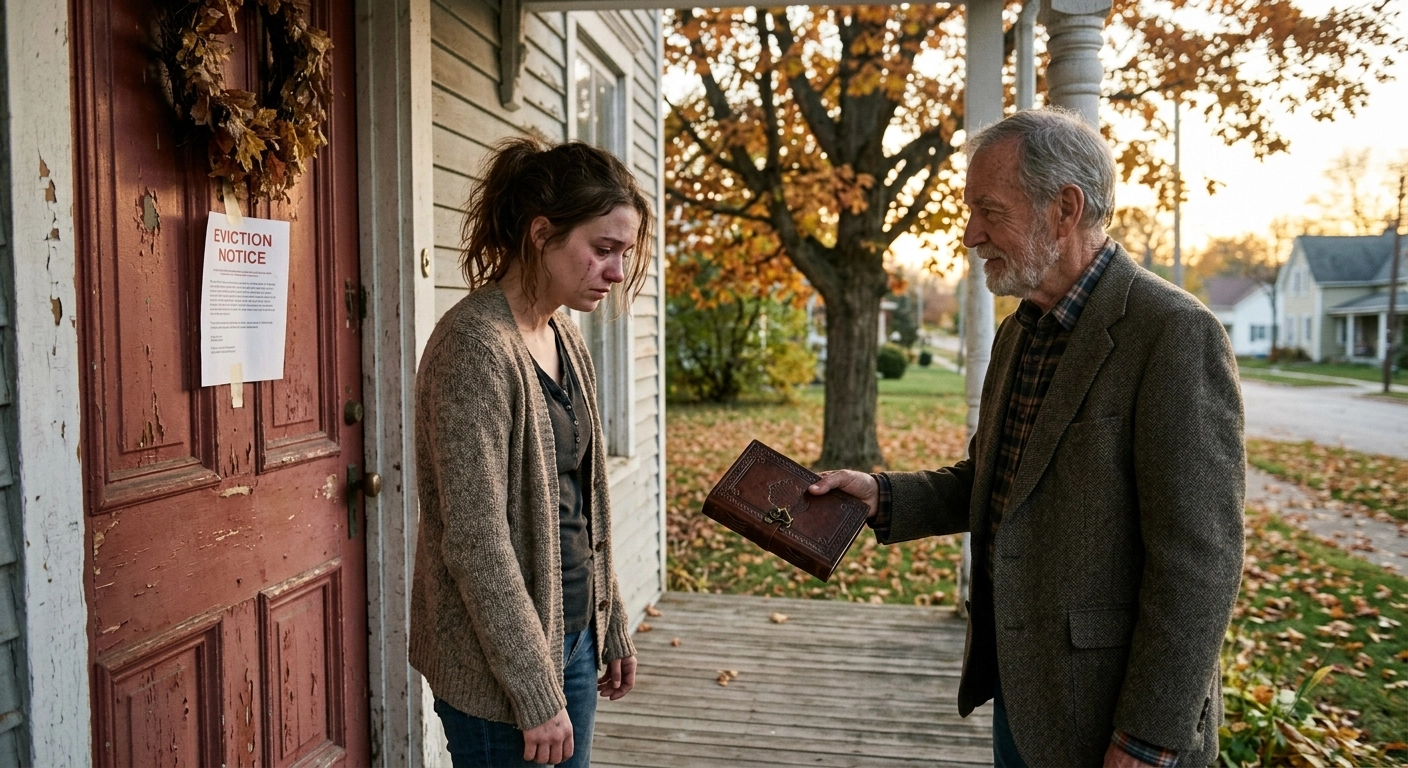
The eviction notice, crisp and white, lay like a death sentence on my chipped kitchen counter.
I was Sarah Miller, thirty-two, recently laid off from my graphic design job, my savings depleted, and my hopes vanishing faster than my meager unemployment checks.
Food was scarce, my phone was about to be cut off, and the bitter taste of failure was a constant companion.
My estranged grandmother, Eleanor Vance, had been a distant memory for most of my adult life, a woman of quiet mysteries and sharp, knowing eyes I barely remembered.
Her passing had brought a fleeting pang of sadness, quickly overshadowed by my own spiraling despair.
The dusty shoebox, retrieved from under my sagging bed, was a last-ditch effort to find anything of value, perhaps an old locket or some forgotten jewelry I could pawn.
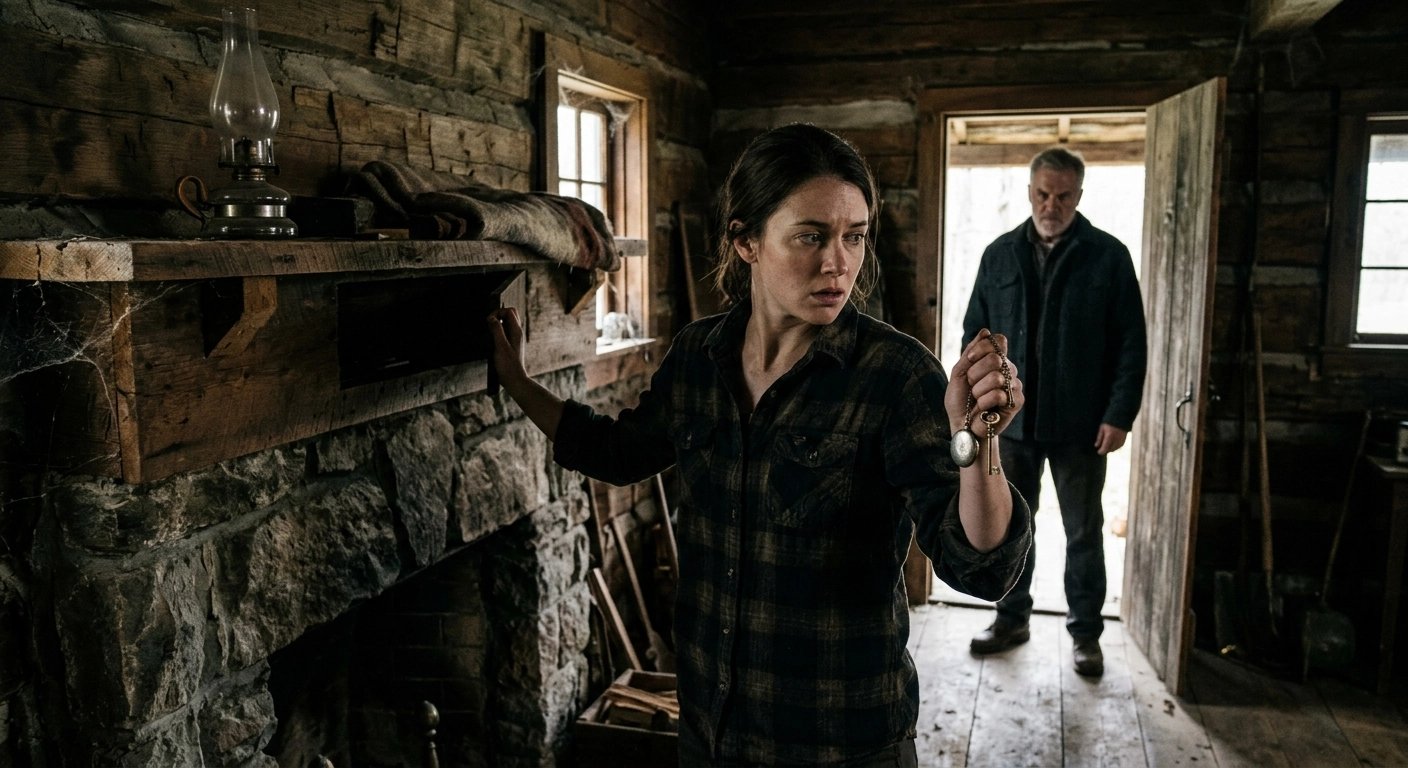
Instead, my fingers brushed against something cold and metallic, an intricately carved brass key that felt ancient beneath my touch.
It was heavier than it looked, adorned with a delicate, faded crest that hinted at a forgotten lineage.
The accompanying note, scrawled on brittle parchment, was undeniably Eleanor's, her familiar, elegant script a ghostly whisper from the past.
"For when you truly need it, my dear Sarah," it read, simple and yet loaded with an inscrutable weight.
A faint memory stirred of Eleanor, in my early childhood, playfully mentioning a "secret treasure" locked away in a big, grand building downtown.
I had dismissed it as a fanciful tale, a grandmother's whimsical invention to amuse a lonely child.
Now, clutching the key, a sliver of desperate hope pierced through my resignation, propelling me out of my apartment and onto the unfamiliar streets.
The Hamilton Trust Bank, an imposing limestone structure with towering columns, stood sentinel over the financial district, a monument to old money and established power.
My threadbare jeans and worn sweater felt out of place amidst the polished marble and hushed opulence of the lobby.
I approached the counter, my heart a frantic drum against my ribs, and timidly presented the key to Ms. Albright, the bank teller.
Her polite demeanor shifted the moment her gaze fell upon the key, a flicker of something unreadable crossing her face before she quickly regained her professional mask.
"This key," she began, her voice unusually hushed, "belongs to a very specific type of account."
She excused herself, her eyes darting nervously around the lobby before she retreated into the manager's office.
The wait stretched interminably, each second punctuated by the dull throb of my anxiety.
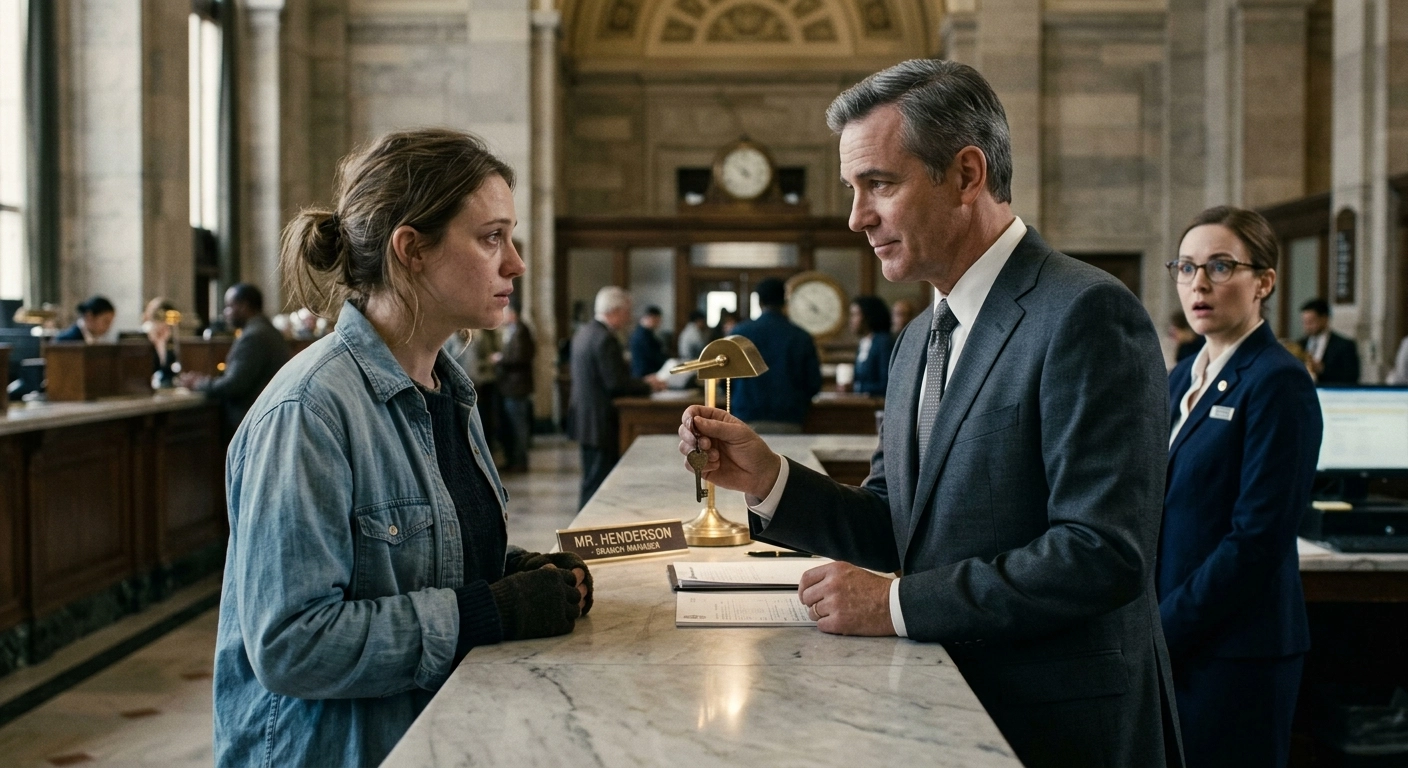
When Ms. Albright returned, she was accompanied by Mr. Henderson, the bank manager, whose practiced smile seemed to crack around the edges as he scrutinized me.
He held the key, turning it slowly under the fluorescent lights, a peculiar glint in his eye.
"Ms. Miller, you claim this key was left to you by Eleanor Vance?" he inquired, his tone measured, almost interrogative.
I confirmed, my voice a shaky whisper, feeling like a supplicant pleading for an unknown mercy.
Mr. Henderson exchanged a swift, significant glance with Ms. Albright, a silent conversation passing between them that heightened my unease.
His smile, now less affable, became unnervingly fixed as he suggested we move to his private office.
The heavy oak door creaked shut behind me, sealing us in a room filled with the scent of old leather and an oppressive silence.
"Ms. Miller," Mr. Henderson began, "your grandmother was a woman of foresight, and considerable means."
He paused, his gaze fixed on me, as if assessing my worthiness for the revelation to come.
"This key, it doesn't open a safe deposit box in the traditional sense."
My confusion deepened, a knot forming in my stomach.
"It's the key to a trust, Ms. Miller," he continued, "a very particular trust established by your grandmother over thirty years ago."
He explained that the trust was designed to remain dormant, its contents inaccessible, until a specific trigger condition was met.
"The condition," he elaborated, "was the presentation of this exact key, by a direct descendant named Sarah Miller, under circumstances that indicated a profound personal need."
He then produced a thick, embossed folder from his desk, pushing it gently towards me.
Inside, meticulously preserved, was an original deed, yellowed with age, for a substantial property.
It wasn't a house or a commercial building I recognized from anywhere in our city.
The address listed an old, derelict mill on the outskirts of town, a place I only knew as a forgotten ruin.
"Your grandmother purchased this property decades ago, Sarah," Mr. Henderson explained, "when it was considered worthless."
He revealed that the land, a sprawling two-acre lot bordering the river, had recently been rezoned for mixed-use development, making it incredibly valuable.
"She had an uncanny vision, a belief that its true potential would eventually be recognized," he added, a hint of admiration in his voice.
Tears welled in my eyes as I realized the depth of Eleanor's love, a silent protection spanning decades, meticulously planned for my darkest hour.
Despite our estrangement, she had seen my future need, a profound act of care that transcended words.
The emotional weight of her foresight was overwhelming, washing away years of perceived abandonment.
This wasn't just a forgotten asset; it was a testament to a love I never truly understood.
I learned that the trust also included a substantial fund specifically for the property's renovation and my immediate financial stability.
My life, which had felt utterly broken just hours before, was now not just salvaged but profoundly transformed.
The Hamilton Trust Bank, under Mr. Henderson's guidance, connected me with architects, developers, and legal advisors.
We began the painstaking process of evaluating the old mill, discovering its historical significance and incredible structural integrity.
The initial appraisal estimates were staggering, far beyond my wildest dreams, enough to ensure my financial freedom for life.
I decided against selling immediately, instead pouring some of the renovation funds into transforming the mill into a community arts center and café.
It was a project that spoke to my own creative spirit and honored Eleanor's legacy of looking beyond the surface.
The center, named "Eleanor's Mill," quickly became a beloved hub, drawing artists and patrons from across the region.
My graphic design skills, once a source of frustration, found new purpose in branding and promoting the vibrant space.
I hired a small team, creating jobs and fostering a sense of community that had been absent from my lonely existence.
I moved into a small, beautifully renovated apartment on the top floor of the mill, waking each day to the creative buzz below.
My former landlord, who had sent the eviction notice, contacted me months later, sheepishly inquiring about available retail space in the newly popular district.
I politely declined, a quiet satisfaction filling me as I realized how far I had come.
My relationships, once strained by stress and despair, slowly mended as I found stability and purpose.
I traveled, invested wisely, and most importantly, found a peace that had eluded me for years.
Every success felt like a quiet conversation with Eleanor, a silent acknowledgment of her enduring presence in my life.
The old brass key now sits framed on my desk at Eleanor's Mill, a daily reminder that sometimes, the greatest treasures are hidden in plain sight, waiting for the moment you truly need them.