The paradox of the American pickup truck is that most people who buy them never use them as trucks. They haul air, not lumber. They tow nothing. Their beds collect groceries and the occasional potted plant. Yet they endure the penalties of truck ownership: poor fuel economy, cumbersome dimensions, and the constant anxiety of parking in a city where spaces shrink daily. This contradiction has created a new category, one that asks a simple question: what if you built a truck for the way people actually live, not the way they imagine themselves living? The Ford Maverick and Hyundai Santa Cruz are the two most compelling answers, and they represent fundamentally different philosophies. One prioritizes utility and efficiency above all else. The other wraps truck capability in a package that feels more like a crossover. The choice between them reveals what you truly value in a vehicle.
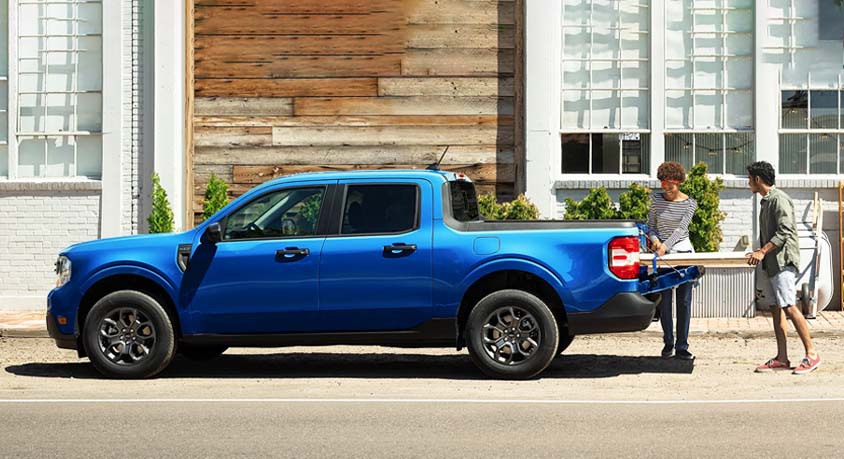
The Ford Maverick is the rationalist's truck. Its claim to fame is the standard hybrid powertrain, a 2.5-liter four-cylinder paired with an electric motor that delivers 191 horsepower and an EPA-estimated 42 MPG in the city. This is not a token hybrid system; it is the heart of the vehicle, providing electric-only operation at low speeds and regenerative braking that captures energy in stop-and-go traffic. The bed is 4.5 feet long, with integrated tie-downs, a 12-volt power outlet, and available 110-volt outlets for tailgating or worksite charging. The Flexbed system includes threaded holes and slots for custom dividers and accessories, allowing owners to configure the space for bikes, lumber, or camping gear. The interior is a study in clever economy, with recycled plastic bottles in the upholstery, door panels that double as storage bins, and a front center console that can hold a laptop. The driving experience is tuned for efficiency, with light steering and a suspension that prioritizes comfort over sportiness.
The compromises in the Maverick are real and require acceptance. The hybrid powertrain, while efficient, produces a continuous variable transmission drone under hard acceleration that can be tiresome on long grades. The bed, while clever, is too short for full sheets of plywood, and the payload capacity, at 1,500 pounds, is adequate but not generous. The interior materials are unapologetically budget-grade, with hard plastics and cloth seats that prioritize durability over luxury. The infotainment screen, an 8-inch unit in base trims, is responsive but basic. The Maverick asks you to embrace its economy, to see its compromises not as failures but as evidence of focus. It is a truck designed by engineers who asked what people actually need, not what they think they want.
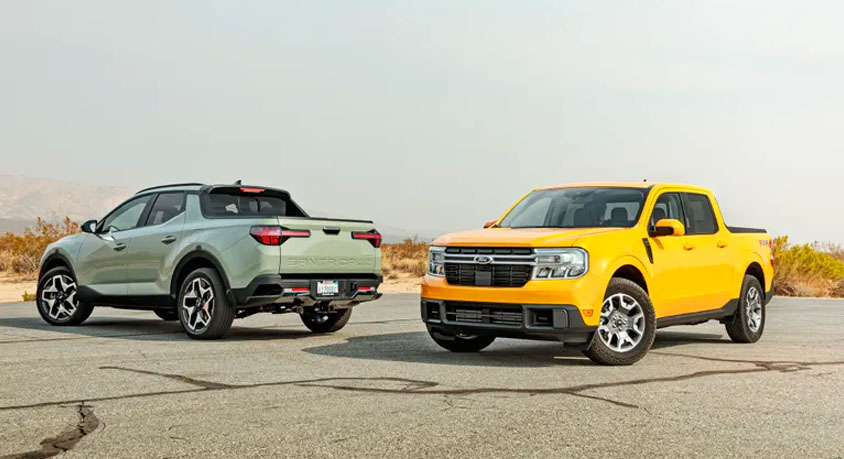
The Hyundai Santa Cruz approaches the problem from a different angle. It shares its platform with the Tucson SUV, and that heritage is immediately apparent. The styling is aggressive, almost sci-fi, with a front end that looks like it escaped from a concept car. The interior is genuinely nice, with soft-touch materials, available leather, and a 10.25-inch digital cluster and infotainment screen that wouldn't be out of place in a luxury vehicle. The bed is shorter than the Maverick's at just over four feet, but it includes a locking tonneau cover and under-bed storage. The engine choices include a 2.5-liter four-cylinder with 191 horsepower and an optional 2.5-liter turbo with 281 horsepower, paired with an eight-speed dual-clutch transmission that delivers sporty, responsive performance. The ride is car-like, the steering is precise, and the overall experience feels more like driving a crossover than a truck.
The Santa Cruz's trade-offs are the inverse of the Maverick's. The fuel economy, even with the base engine, trails the hybrid Ford significantly, with EPA ratings in the low 20s. The bed is less configurable, the payload is lower, and the overall utility is diminished by the styling that prioritizes aesthetics over function. The price, particularly for the turbo model, climbs quickly into the mid-$30,000 range, approaching territory where full-size trucks become viable. Santa Cruz asks you to accept that it is a truck for people who don't really want a truck, who value the lifestyle image of pickup ownership more than the practical capability. It is a vehicle for the buyer who wants to look like they could haul a refrigerator, even if they never will.
On the road, the two vehicles reveal their characters through every input. The Maverick hums along efficiently, its hybrid system seamlessly transitioning between electric and gas power, its light steering making parking effortless, its ride absorbing potholes without drama. It feels honest, like a tool designed for a job. Santa Cruz, by contrast, engages. The turbo engine provides genuine thrust, the dual-clutch transmission snaps off shifts, and the chassis communicates the road surface with a clarity that the Ford lacks. It feels like a vehicle designed for enjoyment, for the daily commute as much as the weekend adventure. The question is whether that enjoyment justifies the penalties in efficiency and utility.
The final choice depends on an honest self-assessment. If you genuinely need a truck for truck things, if you haul materials, carry dirty gear, or tow a small trailer, the Maverick's utility and efficiency make it the rational choice. If you want a truck primarily for the way it looks, for the driving experience, for the feeling of sitting high above traffic, and you're willing to accept the fuel economy penalty, the Santa Cruz will make you happier every time you get behind the wheel. Neither is wrong, but they serve different masters. The Maverick serves the task; the Santa Cruz serves the driver. Choose accordingly.