Let’s get one thing straight right now: I wanted to hate the Tesla Cybertruck. I’m a guy who thinks a truck bed should have a few scratches from hauling mulch, not a $3,000 wrap to protect “exoskeleton” bragging rights. When it showed up in my driveway, it looked like a low-poly model from a video game that forgot to render the curves. But after 400 miles of driving it like I stole it, hauling a friend’s broken-down motorcycle to the shop, and trying to charge it in a rainstorm, I’ve landed somewhere between grudging admiration and utter bewilderment. This thing is a paradox on wheels, and Elon Musk sold it as a revolution, but honestly? It’s a fascinatingly flawed machine that only makes sense if you live in a very specific, very forgiving universe.
First, let’s talk about the elephant in the room—or rather, the 500-pound stainless steel origami sculpture in the room. The panels look cool in the California sun, sure, but they are a maintenance nightmare. After one trip through the automated car wash (don’t judge me, I was curious), the water spots didn’t just sit on the surface; they etched in like fossilized tree sap. I spent two hours with a bottle of stainless steel cleaner, the same stuff I use to clean my barbecue grill, just to make it look presentable. Then there’s the finger oil. Every time you close that massive, heavy door (which feels like shutting a bank vault, which is satisfying, I’ll admit), you leave a greasy print that screams for attention. If you’re a parent hauling kids to soccer practice, prepare for your truck to look like a public restroom mirror by the end of the week. A Ford F-150 Lightning doesn’t have this problem; it just looks like a truck, not a science experiment that demands constant wiping.
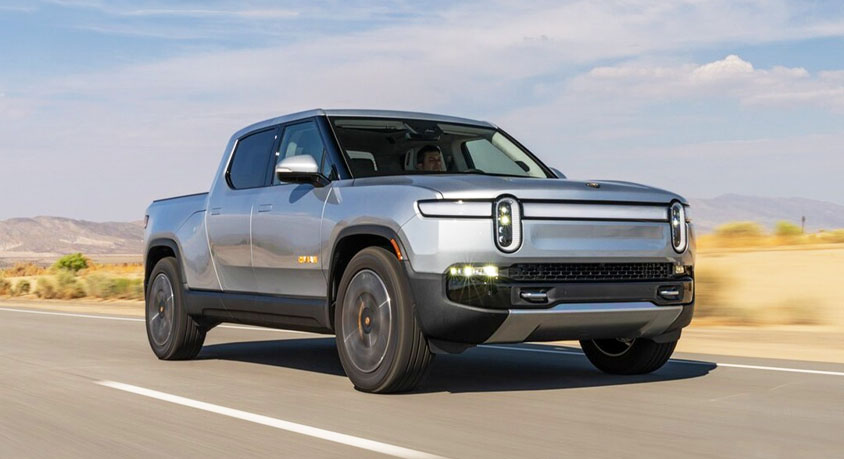
But then you get behind the wheel, and your brain short-circuits. The steer-by-wire system is the single most radical thing here, and it’s the one piece of tech I wish every manufacturer would copy. There’s no physical connection between the steering wheel and the front tires. At low speeds, like navigating the tight aisles at Home Depot while trying to fit 12-foot lumber, the rear wheels turn opposite the fronts. It makes this 7,000-pound behemoth handle like a Mini Cooper. You barely have to turn the yoke—yes, the controversial yoke—to swing the nose around. It’s intuitive in a way that’s hard to explain. It feels like playing Gran Turismo with a high-end simulator, but with actual consequences if you clip the curb. In this one specific area, it makes the Rivian R1T feel old-school, and that’s saying something.
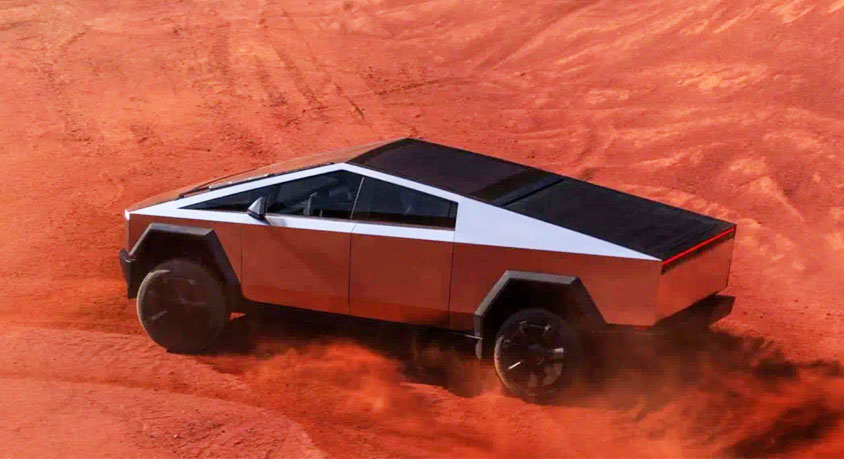
However, the driving experience falls apart when you stop treating it like a tech demo and start treating it like a truck. The ride quality is a mess. It’s stiff, but not in a confident, “I can tow a boat” way. It’s stiff in a way that makes the rear end skip over expansion joints on the highway. I took it to pick up my friend’s motorcycle—a 1970s Honda CB750, nothing massive—and loading that bike into the bed was a circus act. The bed is this weird, slanted V-shape, so the ramp kept slipping. Once the bike was in, strapping it down was a geometry puzzle because the tie-down points feel like they were designed by someone who has only ever strapped down luggage. Compare that to a Ram 1500 TRX or even a standard Silverado, where you have cleats that make sense and a flat floor. The Cybertruck’s “versatility” is impressive on a spec sheet—air compressor, 240V outlet—but in practice, the execution feels like a beta version.
Then there’s the range, or rather, the reality of the range. Tesla claims we’re living in the future, but the charging infrastructure is still the past. The stainless steel body is so heavy that efficiency takes a massive hit. On the highway, cruising at 75 mph, I was seeing consumption numbers that would make a GMC Hummer EV blush. To actually get the advertised range, you have to drive like a saint, and nobody buys a truck shaped like a stealth bomber to drive like a saint. When I plugged in a Supercharger, the charge port location was on the rear driver’s side. If you’re pulling a trailer, you’re blocking the chargers. It’s a fundamental oversight that tells me the off-road and towing capability was an afterthought, not the priority.
I know the guys reading this are going to ask about the build quality. It’s a lottery. My tester had panel gaps you could slide a quarter into on the passenger side, but the driver’s side was tight enough to make a German engineer nod in approval. It’s inconsistent. The interior is the typical Tesla minimalist vibe, but the glass roof lets in so much light that on a sunny day, your bald spot is going to get a tan. The rearview mirror is basically useless because the rear window is a tiny slit, and the digital rearview camera feed is disorienting because it’s looking through a different lens than your eyes.
So, who is this for? It’s for the guy who wants to be first. It’s for the early adopter who cares more about the headline spec sheet than the tactile experience of owning a vehicle. If you need a truck to actually do truck things—like go to the landscape supply yard without worrying about scratching the paint, or tow a camper without having to unhitch it just to charge—you’re going to be frustrated. You’re better off in a Rivian or a Ford Lightning. But if you want a conversation starter that drives like nothing else on the road and you have the patience of a saint for cleaning stainless steel? The Cybertruck is a masterpiece of chaos. It’s just not a very good truck.