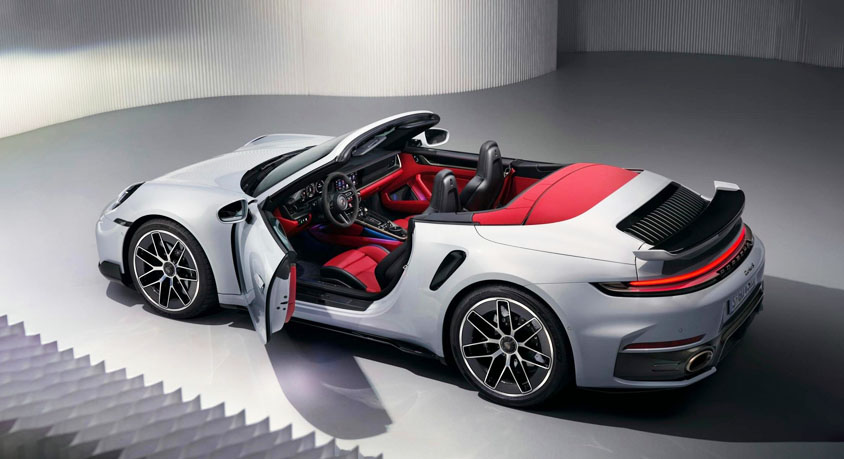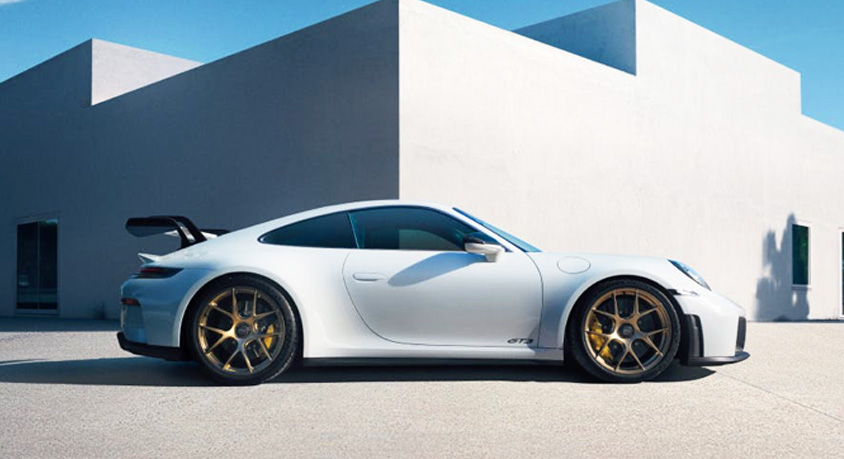
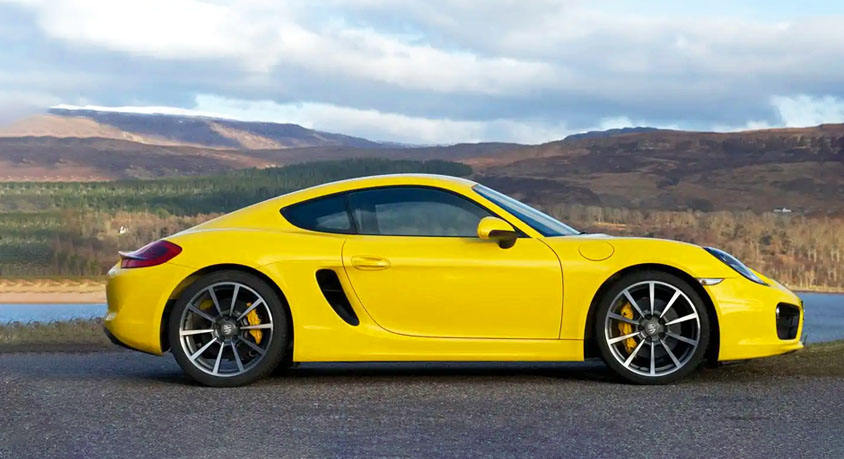
The guy at Cars and Coffee with the 911 Turbo S looked at my press loaner Cayman GTS 4.0 and said, “Nice entry-level Porsche.” I didn’t correct him. I just let him climb into his climate-controlled leather cocoon and drive home to his gated community. Then I took the Cayman to the same canyon road where I’d driven a 911 Carrera two weeks earlier, and I understood something that the spec sheet never tells you. The Cayman isn’t the cheaper 911. It’s the better sports car. Porsche just doesn’t want you to know that because the 911 pays the bills. But here’s the truth: with the 4.0-liter flat-six behind your shoulders and a six-speed manual in your hand, this car does something the 911 can’t. It makes you feel like the engine is part of your spine, not a pendulum swinging behind it.
The engine is the headline and the reason this car exists at all. Under the rear hatch—not a trunk, because the engine lives there—is a naturally aspirated 4.0-liter flat-six making 394 horsepower. No turbos. No hybrid assistance. No synthetic sound piped through the speakers. When you start it cold, the idle has that offbeat boxer thrum that vibrates through the aluminum chassis and into your lower back. Wind it past 5,000 rpm, and the induction noise turns into a mechanical symphony. Valves clattering, intakes sucking, exhaust cracking on upshifts. The BMW M2’s S58 engine is faster. The Supra’s B58 makes more torque. But neither of them sings. The Cayman’s engine has a soundtrack that makes you rev it out just to hear the noise, even when your rational brain knows you should shift.
The mid-engine layout is the secret weapon that Porsche refuses to fully exploit. Sitting in the Cayman, your hips are almost exactly over the center of gravity. When you turn into a corner, the car rotates around you, not in front of you or behind you. I took it through a series of tight switchbacks where the 911 would have required delicate throttle management to keep the rear end from stepping out. The Cayman just carved. It felt like the car was reading my mind instead of reacting to my inputs. A Chevrolet Corvette uses a front-mid-engine layout that puts the engine behind the front axle but still ahead of the driver. The Cayman puts the engine exactly where you sit. The difference is immediate and profound. The Corvette feels like you’re driving a missile. The Cayman feels like you’re wearing it.
The manual transmission is a masterwork that deserves its own paragraph. The shifter has short throws that slot into gear with a precise, mechanical click. Not the rubbery engagement of a Honda Civic Type R, not the long throws of a BMW M2. It’s somewhere in between, with a weight that feels substantial but never heavy. The clutch take-up is linear and predictable, which matters when you’re stuck in stop-and-go traffic on the 405. I spent 45 minutes in gridlock coming back from a shoot in Malibu, and my left leg didn’t cramp once. Try that in a Ford Mustang Shelby GT500 with its heavy twin-plate clutch. The Cayman’s manual is livable enough for daily driving but precise enough for track work. It’s the Goldilocks gearbox.
The interior is where Porsche reminds you that this is the cheaper car, and that’s fine. The materials are good but not great. The door panels have some hard plastic where the 911 gets leather. The infotainment screen is the same as every other Porsche, which means it’s functional but dated. The cupholders are the same flimsy pop-out units that plague every modern Porsche. I hit a bump on the way to get coffee, and my travel mug launched itself into the passenger footwell. A Toyota GR Supra has cupholders that actually hold things. Porsche has cupholders that hold your hope and then betray it. But the driving position makes up for a lot. The seats are supportive without being punishing. The steering wheel is thick-rimmed and feels like gripping a baseball bat. Every control falls exactly where your hands expect them to be.
The practicality is where the Cayman reveals its limitations. The front trunk holds a carry-on suitcase and a backpack. The rear trunk—the one over the engine—is shallow and heats up like a pizza oven after a hard drive. I took this car to the airport to pick up my parents, and I had to put one of their bags in the passenger seat. My mom sat sideways holding a duffel bag for 20 minutes. A 911 has more usable storage space because the front trunk is deeper and there’s a token rear seat that folds. The Cayman is a two-seater for people who travel light or travel alone. Embrace that limitation or buy something else.
The ride quality is a compromise that Porsche executed perfectly. The standard steel suspension in the GTS is firm but not punishing. I drove it over the broken pavement of downtown Los Angeles and felt every crack, but I didn’t regret it. Compare it to the Alfa Romeo 4C, which rides like a shopping cart with flat tires, and the Cayman feels like a luxury sedan. The adaptive dampers in the 911 Carrera are more comfortable, sure. But they also disconnect you from the road in a way the Cayman refuses to do. This car communicates. You feel the texture of the asphalt through the seat, the camber changes through the steering, the weight transfers through your hips.
I parked the Cayman next to a 911 Carrera and stood there looking at both. The 911 is the car you buy when you want the badge, the heritage, the rear seats that barely work, and the ability to tell your neighbors you own a 911. The Cayman is the car you buy when you want the best driving experience Porsche sells for under $100,000. The Lotus Emira has more steering feel. The BMW M2 has more power for less money. The 911 Carrera has more prestige and a better interior. But none of them put the engine exactly where it belongs and tune the chassis to make you feel like a better driver than you actually are. The Cayman GTS 4.0 is the last naturally aspirated, mid-engine, manual transmission sports car Porsche will probably ever build. Drive one before they replace it with something that has batteries and a computer telling you how to feel. You’ll understand why the guy with the Turbo S was wrong about this being entry-level. It’s not entry-level. It’s the peak.