In the quiet hum of its default EV mode, the Toyota RAV4 Prime feels like a conscientious appliance, gliding through suburban streets with a library's hush and an accountant's focus on efficiency. This 42 miles of electric-only range coddles the driver in serene detachment, the only sound being the soft whirr of the electric motor and the rush of air past the mirrors, a bubble of calm that returns a sterling 94 MPGe rating. Depress the accelerator, and it responds with the smooth, linear urgency of a competent electric vehicle, its 179 electric horsepower sufficient for merging and passing without drama, an experience as placid and predictable as a dedicated commuter sedan.
This placidity, however, is a carefully maintained illusion. Nestled within the dashboard is a button labeled, with understated menace, "Sport Mode." Press it, and the vehicle's entire nervous system undergoes a profound rewiring. The 2.5-liter Atkinson-cycle gasoline engine, previously dormant, awakens and couples with the front and rear electric motors in a synchronized surge. The combined system output leaps to 302 horsepower, a figure that places it firmly in hot hatch territory, yet it is the delivery that shocks. Throttle response becomes instantaneous and binary, like flipping a light switch, launching the 4,300-pound SUV to 60 mph in a claimed 5.7 seconds—a pace that humbles many V6-powered rivals.
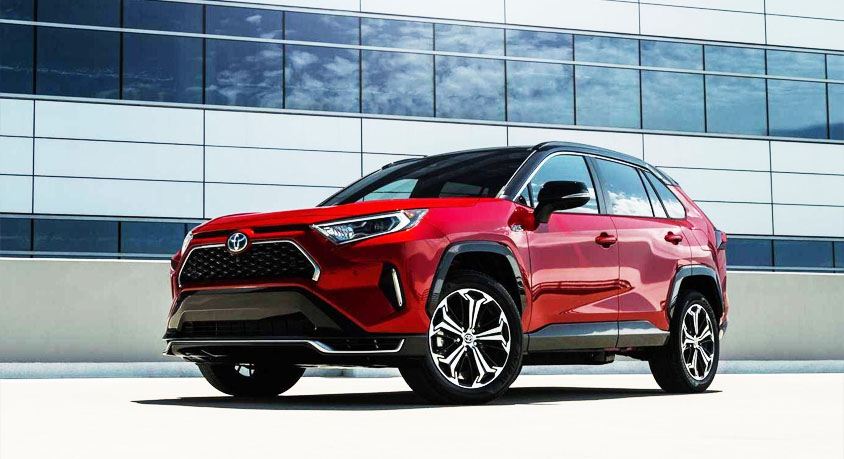
The character split extends beyond mere acceleration. In its gentle Hybrid or EV modes, the powertrain management acts like a meticulous energy accountant, perpetually shuffling power sources to optimize the balance in its ledger, prioritizing the battery's charge and the engine's most efficient thermal window. Engage Sport mode, and this accountant is dismissed, replaced by a tactical coordinator that marshals all available resources—gasoline, electrons from the battery, even regenerative braking strategy—for a singular goal: maximum thrust. The continuously variable transmission, often a source of drone in lesser hybrids, simulates crisp shifts, holding "gears" to keep the engine in its power band, while the all-wheel-drive system proactively shuffles torque to maintain grip.
This performance comes with a predictable, almost contractual, energy penalty. Driving with a heavy foot in Sport mode sees the battery charge deplete rapidly and the gasoline engine drink fuel with the thirst of a conventional SUV, a stark contrast to the sipping efficiency of its alter ego. Yet, this is the core of its engineering proposition: it refuses the forced compromise. The vehicle does not ask you to choose between efficiency and performance for the entire ownership; it allows you to toggle between these states on demand, compartmentalizing them like separate tools in a drawer. You can complete a week of silent, zero-gasoline commuting, then transform the vehicle for a spirited weekend drive on canyon roads, all without changing your vehicle or your mindset.
The RAV4 Prime, therefore, is more than a capable plug-in hybrid; it is a philosophical argument made tangible. It challenges the long-held trade-off that practical, efficient family transport must be dynamically dull. By leveraging electrification not as a sole path to virtue, but as a flexible enabler of duality, it creates a vehicle with a genuine Jekyll and Hyde capability. It asks a subtle but profound question: why should a vehicle have only one personality? In answering, it redefines the ceiling for what a mainstream SUV can be, proving that with the right application of electrons and engineering, the wolf can not only wear sheep's clothing—it can put them on and take them off at will.